


Ten years ago, I left an abusive and profoundly traumatic relationship.
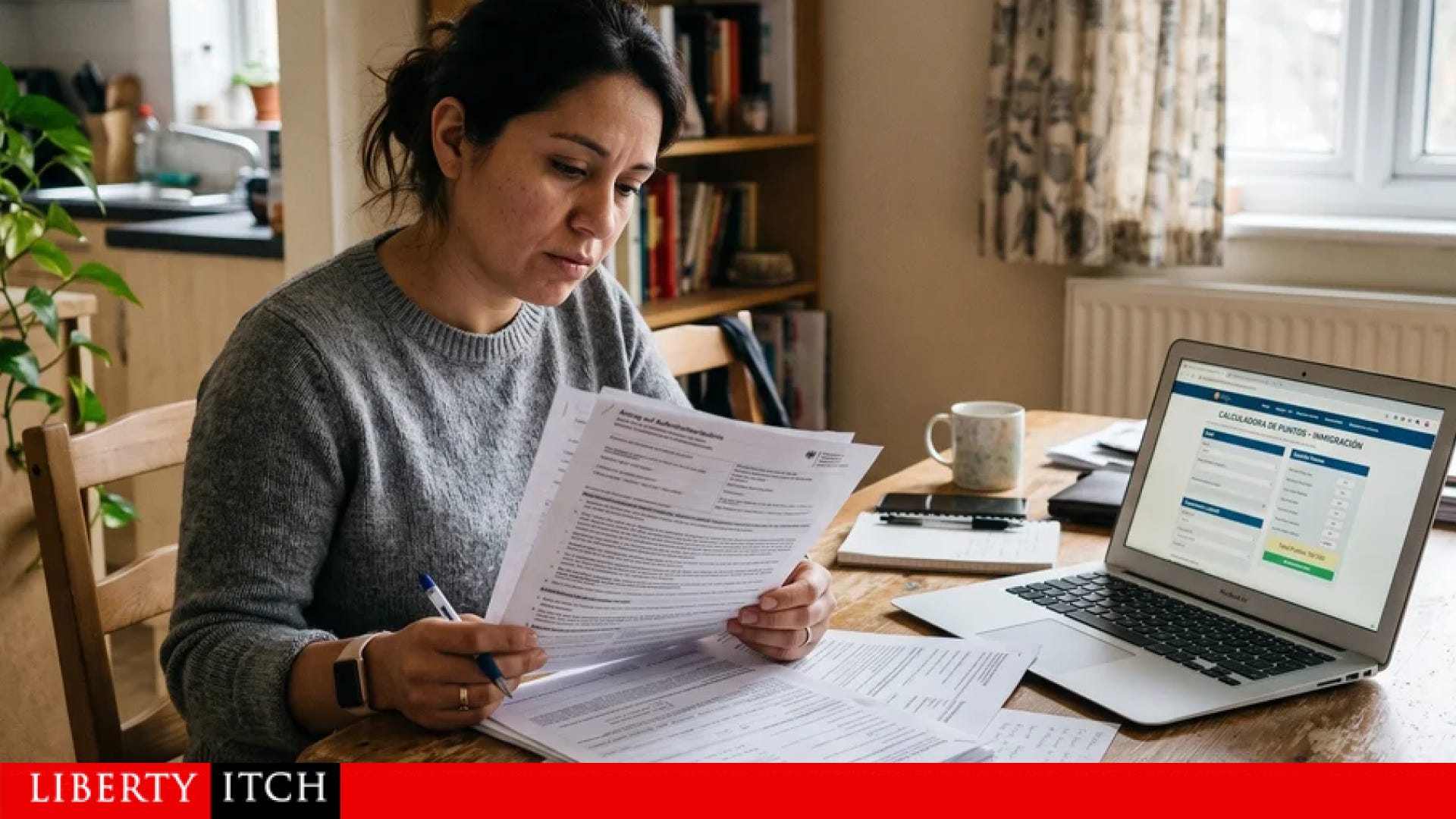
I rebuilt my life, regained my independence and became, in every meaningful sense, a single woman living on my own terms. Yet official paperwork continues to insist that I identify myself as “divorced,” even though that does not describe my present life. Recently, after ticking that box, I was required to provide the name and address of my former husband, the man who abused me. A decade after the relationship ended, I was compelled once again to write his name beside mine.
This is not merely an irritating feature of bureaucracy- for survivors of domestic violence, it can be invasive, humiliating and re-traumatising. The Scarlet Letter has not disappeared. It has become a compulsory box on an official form.
I do not deny that my marriage and divorce occurred. They are part of my legal history. But history and identity are not the same thing. “Divorced” describes the legal conclusion of a past relationship; it does not describe a present life.
I am not married. I am not partnered. I am single. Nevertheless, many official forms do not allow me to say so. The category “single” is often treated as synonymous with “never married,” so once a woman has married, she can never officially return to being single. She must carry the label “divorced” indefinitely. This creates a strange and outdated form of social classification. A woman’s status is defined by her past relationship to a man, even when that relationship ended many years ago, and even when it involved violence, coercion or abuse. The marriage may be over, but the bureaucracy still refuses to release her from it.
Survivors should not remain administratively chained to the people who abused them
Australian law and social policy already accept that an official classification recorded in the past should not necessarily determine a person’s lifelong identification. Australian government guidelines support changing government records so, for example, they accurately reflect a person’s current preferred sex or gender identity. This creates an obvious irony: a person may, subject to the applicable legal process, have a sex or gender marker amended across important government records, yet a woman whose marriage ended ten years ago may still be denied the ability to describe herself simply as single. Instead, she can be permanently classified as “divorced” and may even be required to name the former husband who abused her.
This is not a hypothetical concern. In some Centrelink applications for financial assistance, for example, an applicant who selects “divorced” may then be required to provide details about a former spouse, including their full name, date of birth and address, as well as the dates on which the relationship began and ended. For a person who has left an abusive marriage, such requirements can amount to an administrative reconstruction of a traumatic past. A divorced applicant seeking first-home buyer assistance may also be required to produce a divorce order or certificate, again making a former marriage part of a present application.
The same distinction is embedded more broadly in Australian government systems. The Australian Bureau of Statistics standard categories for registered marital status are “never married,” “widowed,” “divorced,” “separated” and “married.” There is no ordinary option for “single.” However, the Bureau also distinguishes between registered marital status and social marital status, demonstrating that legal history and present circumstances are not necessarily the same thing. The legal categories of gender and marital status are not identical, but the underlying institutional principle is comparable. If autonomy, dignity and present identity are important enough to justify altering official gender records, why are those same considerations dismissed when a divorced woman asks not to be permanently identified through a former marriage?
Why is one historical designation capable of amendment, while another becomes a lifelong administrative label? This is the double standard I am questioning.
I am not arguing that anyone should lose the right to amend their records. I am asking why the principle of compassionate and accurate legal recognition is applied selectively. Surely a system capable of accommodating a person’s choice of gender identity is also capable of allowing a woman to state truthfully that she is single, while recording her previous marriage separately only where it has genuine legal relevance.
There may be limited circumstances in which a person’s full marital history is legally relevant. Matters involving estates, taxation, property settlements, family law, pensions or financial obligations may require accurate historical information. But when marital history is genuinely necessary, institutions should explain why. It should not be collected automatically, habitually or without regard for emotional and privacy implications. Forms should distinguish between two separate questions:
What is your current relationship status, and, have you previously been legally married?
The first question concerns the present, the second concerns legal history.
Where a former spouse’s name is required, the form should explain the precise legal or administrative reason for requesting it. Survivors of abuse should not be compelled to disclose the identity of an abusive former partner merely because a poorly designed form contains a blank space demanding an answer. Institutions should practise data minimisation and collect only the personal information genuinely required for a legitimate purpose.
Autonomy, dignity and present identity are important enough to justify altering official gender records
To encounter an official form that says, in effect, “This marriage still defines you, and you must now name the person involved,” can reopen what a survivor has worked hard to put behind her. The institution may regard this as neutral data collection; the survivor may experience it as forced remembrance. Her abuser’s name appears once again beside her own. The administrative system recreates the attachment she fought to end. She is reminded that, at least in the eyes of bureaucracy, she remains classified by that relationship.
The solution is straightforward. Official forms should allow people to accurately identify their current circumstances. Where previous marital history is legally necessary, it should be requested separately and accompanied by a clear explanation. Where the name of a former spouse is required, the institution should state why it is required, how it will be used and whether an exemption or alternative process is available for survivors of domestic violence. “Divorced” should be treated as a legal history category, not imposed as a permanent social identity.
I am single. My marriage happened. My divorce happened. The abuse happened. But none of those things is the whole of who I am. I am single. I am independent. I am not an extension of my former husband, and I should not be required to invoke his name whenever a form decides that my past marriage matters. Privacy should not disappear because a woman was once married. Survivors should not remain administratively chained to the people who abused them. It is time for our institutions to remove the Scarlet Letter.

Or, what if neither of these could be changed? It seems rediculous that your Sex/Gender can be changed on official documents because of how you feel. Objective reality should be maintained. You are a man or a women. You are/were married or not. Past trauma's, while not a nice thing, does not change this fact.
Very well written and I never really thought of it like that. Let’s hope the powers that be amend this draconian oversight. ❤️