


Many people on the anti-Labor side of politics believe the only way to remove Labor from government is for the Liberal Party and Nationals to work with One Nation. They insist that a coalition between the three is essential if conservative parties want to defeat what they see as a high-taxing, high-spending government.
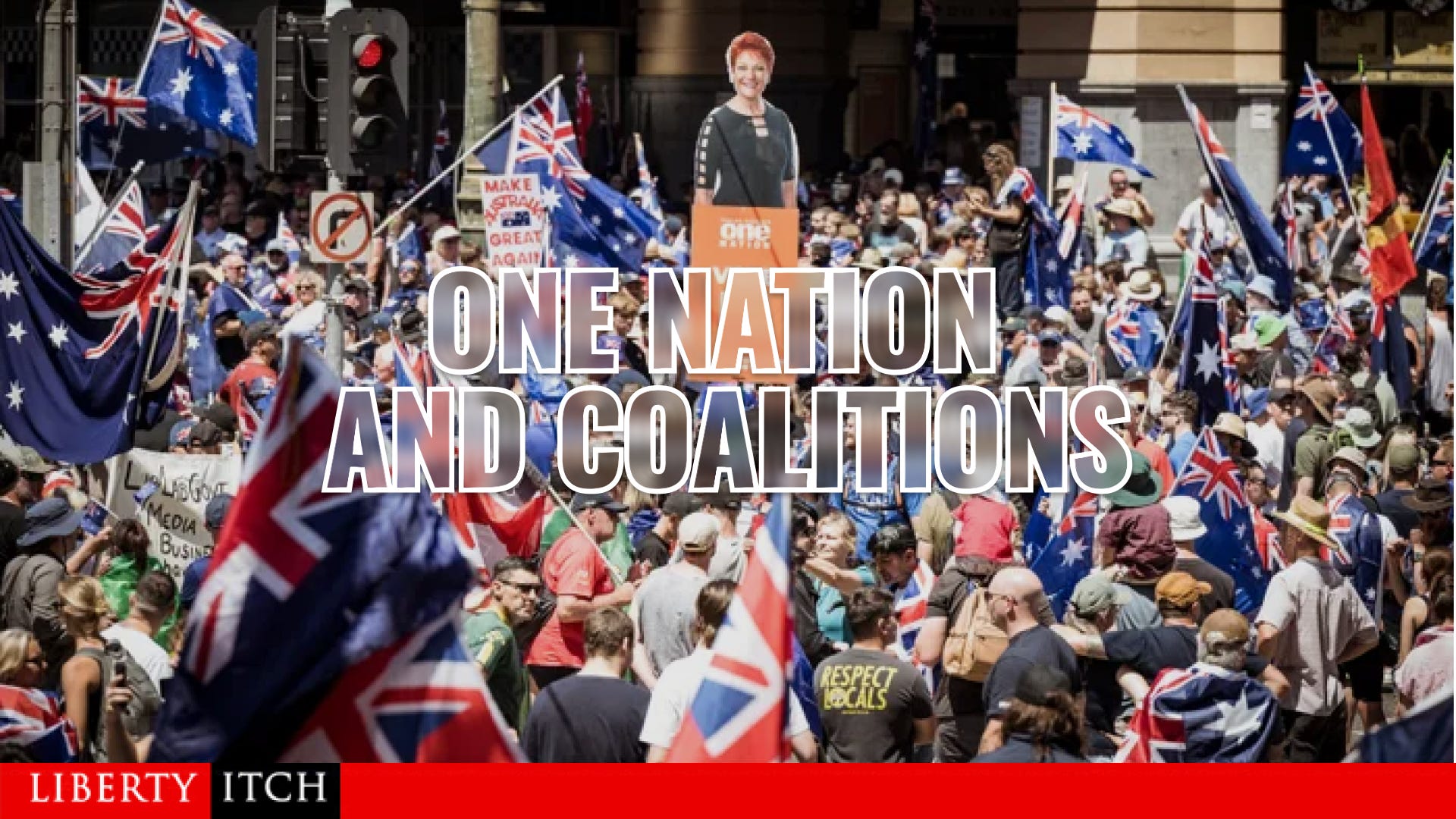
At the same time, senior Liberal figures continue to publicly reject the idea, saying they would “never ever” form a coalition with One Nation. The Nationals have also shown little enthusiasm. This leaves many voters wondering what is really possible.
Coalitions are actually very common in parliamentary democracies around the world. In countries that use proportional representation, such as many in Europe and Israel, single-party governments are rare. Most governments are made up of at least two parties working together.
New Zealand, for example, is currently governed by a coalition involving National, ACT and New Zealand First. NZ First insisted on policy shifts on issues such as immigration as a condition of joining the coalition.
The government of Israel is comprised of a coalition of five parties. One of them, Shas, insisted on military service exemptions for yeshiva students (ie those in full-time religious study).
In the Netherlands, three parties currently form a minority government. A previous coalition member, PVV (led by Geert Wilders), demanded strict asylum/migration controls, border closures, and deportations as a condition of entering.
What matters most is keeping communication open and avoiding unnecessary acrimony. There are two key reasons for this.
In Sweden, the coalition government is comprised of three parties. However, its survival relies on the support of a fourth party, with that support subject to strict immigration reforms, a tougher path to citizenship, deporting non-citizen criminals, a crackdown on gangs, closer inspection of religious schools, capping welfare benefits, limiting non-citizen access to welfare, a reduction in fuel taxes, and expansion of nuclear generation.
Our experience with coalitions in Australia is different, based on the long-running Liberal–National coalition. That has led many to assume coalition agreements must be negotiated before an election and should offer a shared policy platform.
In fact, that is not how most coalitions are formed internationally. More often, parties contest elections independently and negotiate afterwards, once the final numbers are known. Each party focuses on winning as many seats as possible. Only after the election do discussions begin about whether they can work together to form government.
Coalitions also come in different forms. Some involve sharing ministerial positions, as happens with the Liberals and Nationals. Others are more limited arrangements. A minor party may simply agree to support the government on key votes, or guarantee “confidence and supply” — meaning it will support the government in no-confidence motions and budget votes – as is the case in Sweden.
It makes no political sense for the Liberals, Nationals and One Nation to announce a coalition before the next election, due in 2028. Any such announcement would inevitably become a major political target for Labor and its supporters, distracting attention from the policies that each party seeks to promote.
It would also exclude other minor parties that might win seats and help achieve a non-Labor majority.
Greater political advantage will be seen with each party campaigning separately. That allows them to appeal to different groups of voters and promote policies that are not necessarily the same. On issues such as gas exports or the Paris Agreement, for example, each party can argue its own approach is better without needing to settle any disagreements beforehand.
What matters most is keeping communication open and avoiding unnecessary acrimony. There are two key reasons for this.
The first is practical politics. If post-election negotiations become necessary, they are much easier when parties have not attacked each other in destructive ways and there are no personality conflicts.
The second reason involves preferences. In House of Representatives elections, voters must number every box for their vote to count. If a voter’s preferred candidate is eliminated, their vote is transferred according to those preferences.
This means parties need to think carefully about what they do with their How-To-Vote cards. If the Liberals, Nationals and One Nation want to maximise the total number of non-Labor seats, they need to ensure their voters’ preferences flow to one another before Labor or the Greens.
Many people on the anti-Labor side of politics believe the only way to remove Labor from government is for the Liberal Party
Preference flows often decide the outcomes. In many electorates, conservative parties may be behind on first preferences but can still defeat Labor if preferences are tightly exchanged. Equally, if those preferences do not flow efficiently, Labor can win seats despite lacking first-preference support.
Strategic thinking on preferences has long been difficult for the Liberal Party. The party has typically focused exclusively on winning seats itself and is reluctant to assist smaller conservative parties (aside from the Nationals), even when cooperation could improve the broader result for the political right.
This has had major consequences in the Senate, as I have discussed previously, where the Liberals will not be able to achieve a workable majority for the foreseeable future.
Current polling suggests there could be many seats at the next election where Labor leads on primary votes while the Liberals or Nationals and One Nation compete for second place. If the Liberals or Nationals are third, they need to be comfortable with their preferences electing One Nation candidates. Reassurance to their voters that this is intended will be needed.
One Nation will similarly need to ensure their voters are comfortable electing Liberals and Nationals, in preference to Labor. The ‘plague on both their houses’ mentality runs deep among the party’s supporters, but it is not politically constructive.
Only then, if enough seats are won on the anti-Labor side of politics, can discussions about some form of coalition or governing agreement take place. Until that happens, it is not a discussion worth having.

🏛️ The era of majority governments may be coming to an end.
For generations, Australians assumed either Labor or the Coalition would win enough seats to govern alone. That assumption is becoming increasingly outdated.
Voters are fragmenting across One Nation, Libertarians, independents and other minor parties because they no longer feel represented by the old political duopoly.
The result?
Future governments may increasingly be negotiated AFTER elections, not before them.
That's how many successful democracies operate. Parties contest elections independently, voters choose the parliament they want, and governing arrangements are negotiated once the numbers are known.
Far from being a crisis, this could be healthy for democracy.
A stronger crossbench means:
✅ More scrutiny
✅ More accountability
✅ More negotiation
✅ Fewer blank cheques for governments
✅ More voices represented
The real question isn't whether Labor, Liberal, One Nation, Libertarians or others should form pre-election coalitions.
The real question is whether they can work constructively after voters have spoken.
The age of the political duopoly is fading.
The age of negotiated government may only just be beginning.
And that's exactly why every vote for a minor party matters.
A strong crossbench asks the questions the major parties don't want asked.
A strong crossbench is the people's check on power.