


The Albanese Labor government has little difficulty passing its legislation. Since its election in 2022 it has had a significant majority in the House of Representatives and, although lacking a majority in the Senate, has nearly always enjoyed the support of the Greens and some left-wing crossbenchers.
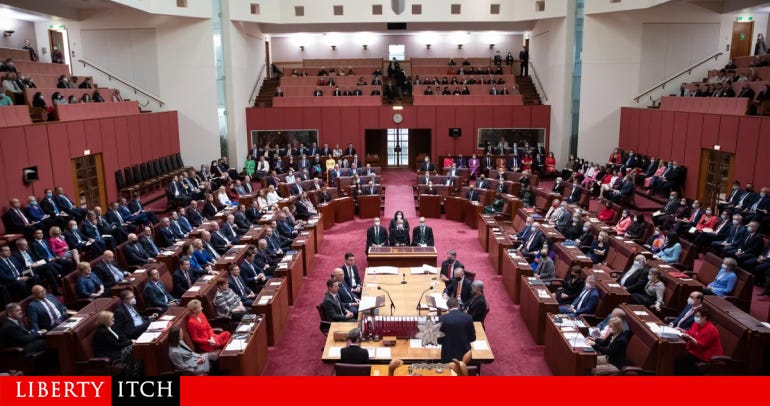
The Liberal/Nationals Coalition is powerless to block legislation unless it can enlist the support of the Greens and some crossbenchers. For obvious reasons, that is rare.
Even if the Coalition had won the 2022 and 2025 elections, it would still have had a problem in the Senate. The combined votes of Labor, the Greens and left-wing crossbenchers would have ensured that nothing controversial was passed.
This is not a new problem for the Coalition. In 2013, when Tony Abbott led his party to victory, the Senate proved his undoing. While he succeeded in repealing the carbon tax and passing legislation to deal with illegal immigrants, most of his economic policies were blocked in the Senate. That led to the perception that his government was failing, causing a decline in public support and his replacement in 2016 with Malcolm Turnbull.
Turnbull thought he could fix the Senate problem by changing the method of electing it. Rather than political parties negotiating to exchange preferences, in a system known as group voting tickets, preferences would be made optional and left entirely to voters.
Liberals could probably have won several more Senate seats if they had negotiated preference deals
Turnbull and his ministers, with Mathias Cormann the leader in the Senate, convinced themselves that under the new method the Coalition would gain sufficient numbers in the Senate to pass its legislation whenever it won government.
Historically, changes to the electoral system have had the support of both sides of politics. Not this time; Labor vociferously opposed the proposed changes (as did several crossbench senators, including me and Bob Day). As a result, the Coalition negotiated a deal with the Greens. The combined vote of the Coalition and the Greens ensured the changes became law and the 2016 double dissolution election was called soon after.
Labor opposed the changes because it foresaw a future in which it would be forever reliant on the Greens, with little prospect of achieving a majority in its own right. While the policies of the two parties overlap quite a lot, they compete strongly for the left vote.
The Greens supported the changes because they realised it would stop most minor parties from winning seats, and relished the prospect of having the balance of power with two Senate seats from each state.
As the 2016 and each subsequent election showed, Labor and the Greens were correct; Turnbull and the Liberals were wrong. Although the Coalition won the 2016 election (with a much reduced majority), its position in the Senate was not improved and it struggled to pass its legislation right up to 2022.
There are competing arguments as to whether democracy was enhanced by the new voting system. While the group voting ticket system could be criticised for allowing political parties to exchange preferences in ways that disregarded the wishes of their supporters, it allowed minor parties to work together to win seats. It also only required voters to vote 1 above the line.
On the other hand, optional preferential voting in the Senate is confusing when there is compulsory preferential voting in the House of Representatives.
However, the method of voting is not the reason the Coalition has been so dismally unsuccessful in the Senate. They did poorly both before and after the system was changed.
The primary reason is the reluctance of the Liberals (as the dominant party in the Coalition) to establish beneficial relationships with minor parties on the right.
The party’s attitude, mostly found among its national and state directors rather than its elected representatives, is that any party that competes for primary votes is a foe, irrespective of any assistance they might provide via preferences.
There is also little interest in helping a candidate from a sympathetic minor party win a Senate seat rather than Labor or the Greens, if the Liberals cannot win it themselves
They realised it would stop most minor parties from winning seats, and relished the prospect of having the balance of power
There have been exceptions – a couple of minor parties that supported them on every vote – but the contrast with Labor is stark. While Labor has always been open to negotiating with other parties, somewhat irrespective of policies or history, the Liberals engage reluctantly if at all. And when they do it is often too late, being close to the election when deals with other parties are already in place.
Their treatment of my party, the Liberal Democrats (now Libertarian Party), illustrates their thinking. Not only were they always reluctant to engage on the issue of preferences, in 2021 they changed the law to prevent my party from having the word “liberal” in its name. That cost the Liberals many preferences. The architect of the change was a former state director.
Under the group voting ticket system the Liberals could probably have won several more Senate seats if they had negotiated preference deals with some of the many minor parties. They not only did not know how to do this; they did not want to.
Under the Turnbull system, preferences are mostly exchanged via how-to-vote cards, which many voters automatically follow. If they had negotiated deals with minor parties on these, there is similarly a good chance the Coalition could have won more Senate seats.
Whether the Liberals can recover from their current malaise to regain government is a moot point at the moment, with One Nation snapping at their heels. But even if they do, unless they adjust their thinking to the realities of the voting system they introduced, their ability to govern will continue to be severely compromised.

Absolutely right, David.
One reason the Liberal/National parties increasingly struggle to win Senate seats or build broader electoral support is their belief that if they don’t receive a voter’s first preference, that voter must somehow be their enemy.
Modern elections simply don’t work that way. The Senate, in particular, is built on preferences, cooperation and respect for minor parties and their voters.
But Queensland’s unicameral system has shaped a different mindset. With no Upper House and a “winner-takes-all” parliament, major parties can fall into the habit of assuming they deserve total loyalty rather than needing to earn support across the political spectrum.
In a preferential voting system, treating potential allies as enemies is not strategy — it’s a path to losing representation.