


Last September I wrote that Australia did not have a tobacco problem; it had a government problem. Less than a year later, the same government problem is spreading to alcohol.
Try as they might, Australian politicians still refuse to learn the most basic lesson of economics: when government makes a legal product prohibitively expensive, demand does not simply vanish. Consumers substitute and evade, criminals enter the market, honest businesses lose sales, tax revenue falls, and the state then responds to the consequences of its own policy with more regulation, more police powers and more taxpayer-funded enforcement.
We have already watched this disaster unfold with tobacco. Now illicit alcohol is appearing in suburban bottle shops, pubs and nightclubs.
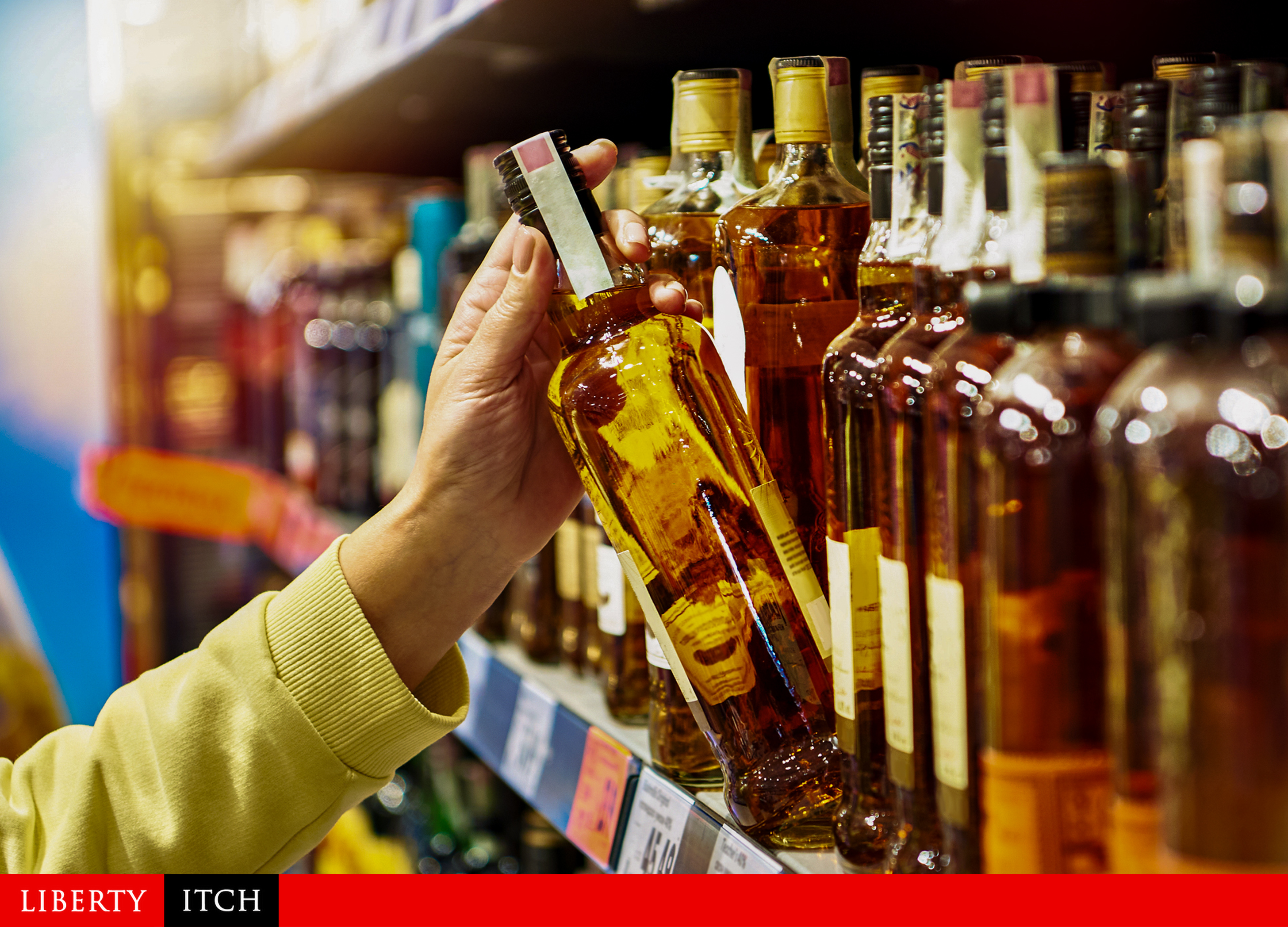
Recently, a group of researchers visited more than 100 Victorian liquor stores and found that at least 30 stocked illicit alcohol. They didn’t visit a single metropolitan or regional postcode without finding at least one retailer selling it.
Some illicit products are being manufactured in unlicensed facilities or produced off the books by otherwise legitimate distilleries. Other products are illegally imported.
Testing has detected methanol, plastic contaminants and industrial denaturants in bottles offered for human consumption. Police have warned of alcohol containing chemicals used in paint stripper, brake fluid, solvents and synthetic rubber.
The cause is exorbitant taxation and overbearing regulation, which have again produced less safety, less freedom, and more organised crime. The booming black market damages legitimate businesses and peddles products that may seriously injure or kill consumers.
We have already watched this disaster unfold with tobacco. Now illicit alcohol is appearing in suburban bottle shops, pubs and nightclubs.
The federal excise on most spirits is now above $100 per litre of pure alcohol. That means more than $30 in excise is loaded onto a standard 700-millilitre bottle of 40 per cent spirits before GST, transport, wages, rent and retail margins are added. The tax is normally indexed twice a year, allowing Canberra to increase it automatically without a politician ever having to stand before the public and defend another tax hike.
Alcohol taxation and regulation in Australia is creating a spectacular profit margin for anyone prepared to skirt the law.
The government’s own figures expose the scale of the failure. The Australian Taxation Office estimated that illegal activity created a $767 million alcohol-tax gap in 2023–24, approaching one-tenth of the alcohol duty that should have been collected. The volume involved has been estimated at more than 10 per cent of the spirits sold legally in Australia. The black market is becoming a serious competitor to the legal market.
Since 2000, Australian beer prices have risen 157.6%, compared with 82% in the United States, 67% in Germany, and 30.3% in Britain. Beer prices in Japan decreased by 3% in the same period.
Of course, Australia hasn’t abolished drinking; we’ve simply made it extraordinarily expensive. The result? Criminal cartels can offer a bottle at a price no legitimate distiller or retailer could possibly match. Honest retailers must pay excise, GST, licence fees, wages, insurance and compliance costs. Government has loaded one side of the scales and then wonders why the black market is surging.
This is another demonstration of the Laffer Curve – there is a point at which higher tax rates encourage so much substitution, avoidance and evasion that they lead to the collection of less revenue. Australia has comprehensively crossed that line with tobacco, and now appears determined to stagger across it with alcohol.
Neither major party can escape responsibility. The Coalition had almost a decade in government to reform this dysfunctional system and instead allowed automatic excise increases to continue. Labor has frozen the indexation of draught beer excise for two years, but this will barely dent our world-leading beer tax revenue. Spirits continue to be punished. Both parties tinker around the edges because neither will admit that excessive taxation is funding organised crime.
Instead, the uniparty continues to blame loopholes, inadequate licensing, poor traceability and weak enforcement. Some of those problems are real; the alcohol excise remission scheme may be exploited by fly-by-night operators, and retailers should know where their stock comes from. But piling fresh compliance costs onto every honest distiller and bottle shop will not eliminate the enormous financial reward for breaking the law.
Australian politicians still refuse to learn the most basic lesson of economics: when government makes a legal product prohibitively expensive, demand does not simply vanish.
Criminal syndicates do not care about licence fees, reporting obligations, health warnings or batch numbers. Every new rule is a cost borne by legitimate businesses and ignored by criminals. That is precisely how government regulation transfers market share from the compliant to the lawless.
Public health campaigners will say high prices reduce alcohol consumption. Perhaps they reduce some legal purchases. But a policy cannot be called successful when it pushes consumers underground and towards products containing unknown chemicals, sold by people who do not check ages, observe responsible service requirements or carry product liability insurance.
Harm reduction that makes the market more dangerous is not harm reduction.
The answer is not alcohol prohibition by instalment. Australia should freeze and substantially reduce spirits excise, end automatic twice-yearly increases, and replace the incoherent patchwork of beer, wine and spirits taxes with a simpler, lower and transparent system. Government should target violent criminals, fraudulent manufacturers and retailers knowingly selling contaminated products, not make every lawful drinker and legitimate business collateral damage in another moral crusade.
Australia’s tobacco wars were not an unforeseeable accident. They were the predictable result of government policy. Governments were warned, ignored the warnings and then pretended to be shocked when shopfronts were torched.
The alcohol black market is not emerging despite government policy. It is emerging because of it.
