


Australia has a massive mental-health problem, with almost half of all people experiencing a “mental disorder” at some point in their life. That is, every second person has allegedly had a mental-health problem. Statistically speaking, there is a 1 in 2 chance that we have had one ourselves.
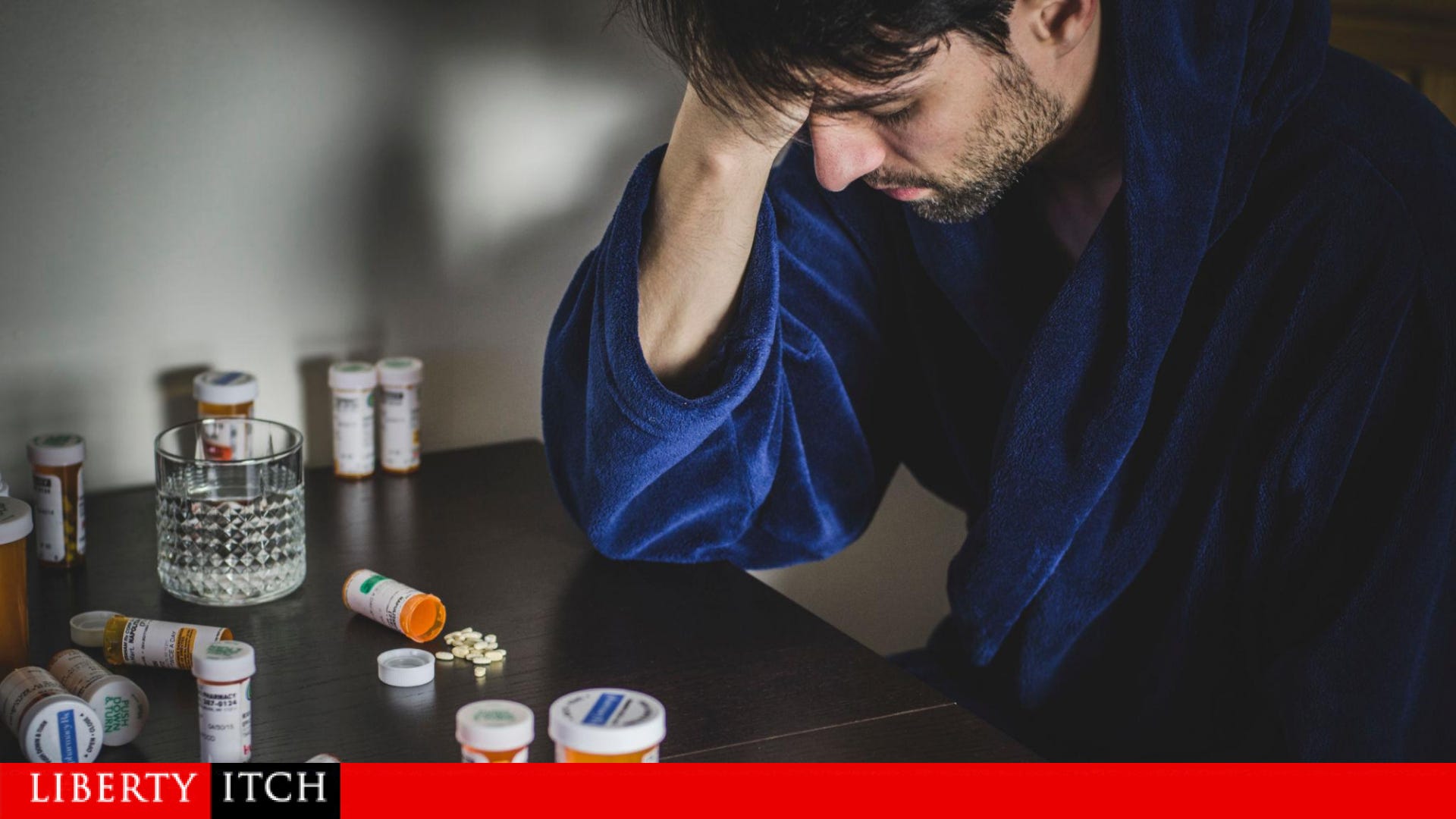
Naturally, it’s all about the definition. Mental health is now described as a state of wellbeing in which an individual can realise their potential, cope with the normal stresses of life, work productively and contribute to the community. Mental illness or mental disorder, meanwhile, is a health problem that significantly affects how a person feels, thinks, behaves and interacts with others.
By those standards it is hardly surprising that so many people can be classified as having experienced a mental disorder. Almost everyone has periods when they are miserable, anxious, irritable, irrational, distracted, withdrawn or unable to function at their usual level. Bereavement, relationship breakdown, financial stress, humiliation, disappointment and ordinary adolescent turmoil can profoundly affect the way people feel and behave. It would be unusual not to experience at least some of them.
This raises a difficult question. If such experiences are so widespread, when does ordinary human distress become a medical condition? Once an ordinary response to life is classified as illness, the appropriate response changes. Sadness becomes something to treat rather than something to endure; poor judgement becomes a symptom; unruly behaviour becomes a disorder; eccentricity becomes a diagnosis. And of course, personal responsibility is out the window.
The consequences extend far beyond language. Mental health is increasingly invoked to explain behaviour that was once described as antisocial, irresponsible, immature, unwise or criminal. Sometimes that explanation is justified: severe depression, psychosis, bipolar disorder and other serious illnesses can be devastating and require professional treatment. But expanding the boundaries of illness does not necessarily help those people. When the category is so broad, the distinction between the seriously ill and the temporarily distressed becomes harder to maintain.
A society that treats every deviation from happiness, productivity or conventional behaviour as pathology risks turning normal human variation into a permanent medical problem.
It also encourages governments to “do something” and creates a huge honey pot for the pharmaceutical industry. Australia’s enormous expenditure on mental health and disability services illustrates the problem. Almost one in five Australians were prescribed antidepressants, psychostimulants or other mental-health-related drugs in the 2025 financial year, according to Australian Institute of Health and Welfare. ADHD medicines alone were dispensed to about 761,000 people, or 2.8 per cent of the population, up from 0.6 per cent a decade earlier. Among boys aged five to 17, the proportion receiving psychostimulants and related medicines was about 10 per cent.
These figures do not prove that people are being wrongly diagnosed or medicated. There are undoubtedly many Australians whose lives have been transformed by appropriate diagnosis and treatment. But the scale and speed of the increase should prompt questions about where the boundary between disorder and normal variation now lies. Psychiatrist Ian Hickie has raised concerns about prescribing practices and, particularly, Australia’s failure to adequately monitor whether medications remain effective or should be discontinued. Starting treatment, he argues, is much easier than systematically assessing its long-term results.
The same tension appears in the discussion of male suicide. Seven Australian men die by suicide each day, and suicide represents a substantial loss of potential years of life among Australian males. Yet many people who die by suicide have no diagnosed mental illness, while most people with a mental illness do not die by suicide. Is even more public expenditure on conventional mental health services an appropriate solution to that?
The response can also become distorted when social problems are medicalised. Teaching boys about gender equity might occasionally have merit, but it does not follow that it is a treatment for male suicide. Likewise, an anti-stigma campaign may help people seek assistance, but it cannot substitute for understanding why particular individuals become suicidal. A social problem can have psychological dimensions without itself being a psychiatric disorder.
There is a similar danger in the growing use of disability categories. The National Disability Insurance Scheme now supports tens of thousands of Australians with psychosocial disability, while rapidly increasing numbers of people diagnosed with autism and other conditions have contributed to intense debate about the scheme’s future. People with severe and enduring disabilities require support, but every difficulty encountered in ordinary life should not automatically generate an entitlement to medical or disability intervention.
Mental illness or mental disorder, meanwhile, is a health problem that significantly affects how a person feels, thinks, behaves and interacts with others.
The challenge is therefore not to deny mental illness but to define it carefully. A society that treats every deviation from happiness, productivity or conventional behaviour as pathology risks turning normal human variation into a permanent medical problem. It can also encourage people to see themselves primarily through the lens of diagnosis, rather than as individuals capable of adapting, recovering and sometimes simply enduring difficult experiences.
Being unusual does not make something pathological, and the fact that a behaviour causes inconvenience or social friction does not make it an illness. Being left-handed undoubtedly affects how a person feels, thinks, behaves and interacts with others, yet we regard it as normal even though it is a lot less common than 50%. Should we redefine it as also a mental illness?
Medicine should identify genuine disorders by their severity, persistence, impairment and clinical characteristics, rather than by the mere presence of unpleasant emotions or unconventional behaviour.
Mental health may indeed be one of medicine’s great remaining frontiers. But acknowledging uncertainty is part of understanding the problem. The objective should not be to make everybody psychologically comfortable at all times. It should be to ensure that people with serious mental illness receive timely, effective care while retaining enough room in our definition of normal life for sadness, eccentricity, mistakes, frustration, grief and poor judgement. If we medicalise too much of ordinary life, we risk not only treating what does not need treatment but also losing sight of those who desperately do.

This article raises a broader libertarian question about personal responsibility and individual autonomy.
Genuine mental illness can be debilitating and deserves appropriate professional care. But we should be careful about turning the ordinary difficulties of human life—grief, disappointment, anxiety, frustration, mistakes, poor judgement or unconventional behaviour—into conditions requiring institutional intervention. The article makes this distinction clearly.
There is a deeper consequence. When more aspects of life are defined as problems requiring government, medical or bureaucratic solutions, the sphere of individual responsibility inevitably becomes smaller.
A free society needs people to have the freedom to make choices, experience consequences, learn from mistakes, adapt and recover. Government should provide a safety net for people facing genuine incapacity—not progressively assume responsibility for every difficulty of living.
The test should therefore be simple:
DOES INTERVENTION HELP PEOPLE REGAIN AUTONOMY AND RESPONSIBILITY, OR DOES IT MAKE THEM MORE DEPENDENT ON INSTITUTIONS?
Libertarianism isn't about abandoning people who genuinely need help.
It is about trusting individuals wherever they are capable of directing their own lives—and resisting the temptation to turn every human problem into a government responsibility.
In the age where pronouns are passé and the REAL grift is adding what TikTok mental health diagnoses you have to your social media bio, David is right - if everything is a mental illness, then nothing is. There has to be a baseline of human behaviour at some point, right?