


Trump’s seizure of Venezuela’s oil under the pretext of a law enforcement operation to prosecute an alleged drug trafficker has removed any doubt that America under Trump has fully embraced mercantilism, with dangerous implications for the entire world. Trump 2.0’s economic policies, including wide ranging tariffs, investments in strategic industries, efforts to reshore manufacturing, an obsession with trade imbalances, and now neo-colonial grabs for natural resources, are largely read as necessary responses to the perceived failures of neo-liberal economic reforms in the nineties and naughties under successive Democratic and Republican administrations.
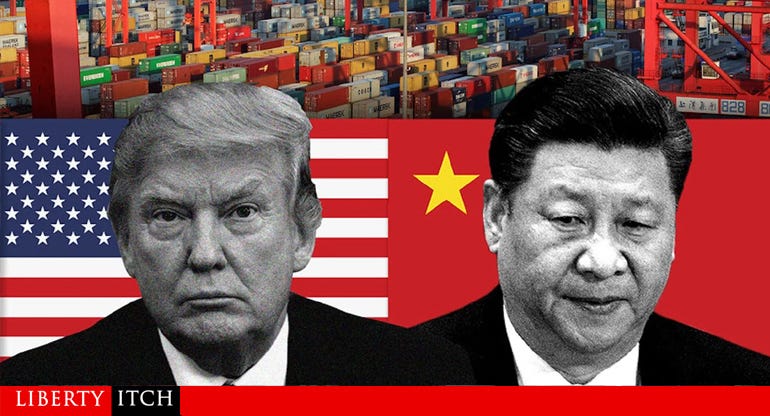
What they actually represent is a return to the mercantilist economic philosophy and policies of nineteenth century Europe, which the classical liberal Austrian economist, Ludwig von Mises, believed led to devastating wars in Europe and the Pacific.
Mercantilism regards trade as a zero-sum contest between independent states with mutually exclusive national interests, producing winners and losers, not mutual benefit and prosperity. Favourable trade balances — exporting more than a state imports—is the core principle and aim of mercantilism and the very thing Trump’s liberation day tariffs were designed to accomplish, by both raising revenue and incentivising the reshoring and revitalisation of manufacturing in America.
America’s heavy oil refineries in Gulf states are apparently hungry for Venezuela’s heavy crude oil
This strategy is not just facilitated by tariffs, however, but also by regulating strategic industries in the national interest. On this score, Trump’s record is impressive. His meetings with the CEOs of semiconductor companies seem to invariably result in the US government taking a fat slice of their profits. The Pentagon has been on a shopping spree investing in the natural resources industry, whether guaranteeing floor prices for American rare earths producers, taking equity stakes in mining companies, and now investing in a new smelter in the US to refine critical minerals. The Pentagon is now apparently a hedge fund. Wherever one looks, one sees the erstwhile party of free enterprise and deregulation intervening in the economy, from bullying the “independent” Fed on interest rates to most recently floating the idea of determining who can and cannot purchase property in America as a way of reshaping the housing market.
In essence, the government’s economic role is to probe, prod, bend and mould the economy in the national interest as perceived by the mercantilists. This is best described as national interest state capitalism. Its closest historical analogue is the Third Reich. Its contemporary analogues are China and Russia.
Venezuela was the missing piece in the completion of Trump’s mercantilist remaking of American economic and foreign policy. A core tenet of mercantilism has always been extracting the natural resources of other weaker countries, once upon a time through colonialism, today through military and economic coercion, bolstered by Truth Social posts and memes. It is abundantly clear, because Trump told us so, that the Maduro operation ostensibly carried out to bring a drug trafficker to justice was little more than a pre-text to get control of Venezuela’s vast oil reserves, long imprisoned behind sanctions and decrepit means of extraction. America’s heavy oil refineries in Gulf states are apparently hungry for Venezuela’s heavy crude oil that powers jet fighters and aircraft carriers, unlike America’s light crude shale oil that is only good for powering cars.
With America joining China and Russia in the game of state capitalism, our world’s neo-mercantilist fate is sealed. And we should all brace for impact, because a global war is now looking more likely than ever, whether it is the big one between the US and China or a series of rolling lower-level conflicts that affect every corner of the planet (including Greenland). Many think the developing tanker wars, with American and Russian naval assets shadow boxing over oil tankers departing Venezuela, is already a step on the other side of the Rubicon. The bottom line? Trade “war” is not a metaphor for the mercantilist. It describes the reality that trade is intrinsically an existential contest between rival great powers in which there can only ever be one winner. Losing the war is unthinkable given the existential implications.
The government’s economic role is to probe, prod, bend and mould the economy in the national interest as perceived by the mercantilists.
This mentality is extremely dangerous because the logical extension of a trade war is an actual military war.
As trade wars inevitably escalate in accordance with Newton’s Third Law of Motion—for every action, there is an equal and opposite reaction — at some point the mercantilist leader takes the logical next step and employs the military in an attempt to “win” the trade war once and for all. And why not? If one accepts the mercantilist assumptions, then what better way is there to win a trade war than to militarily defeat your economic rival and then make them pay reparations and/or reshape their economy to suit your purposes? It is entirely logical given the trade contest is existential and there can only be one winner.
Is this Trump’s plan? I doubt it. But it would be remiss not to point out that Trump’s mercantilist efforts to transform the US into a self-sufficient producer with secure supply chains independent of China may ultimately seduce Trump and his advisers into the delusion that America could prevail against China in a hot war, whether it is one they plan to start or one they expect to be forced upon them.
