


“Protect the children” is the rallying cry of supporters of the under 16 social media ban, to come into effect on 10th of December 2025 along with a lesser known and debated set of UK style age-based content restrictions for search engine accounts, set to commence on the 27th of December 2025. The latter being unilaterally implemented by the eSafety Commissioner with no debate or legislative process.
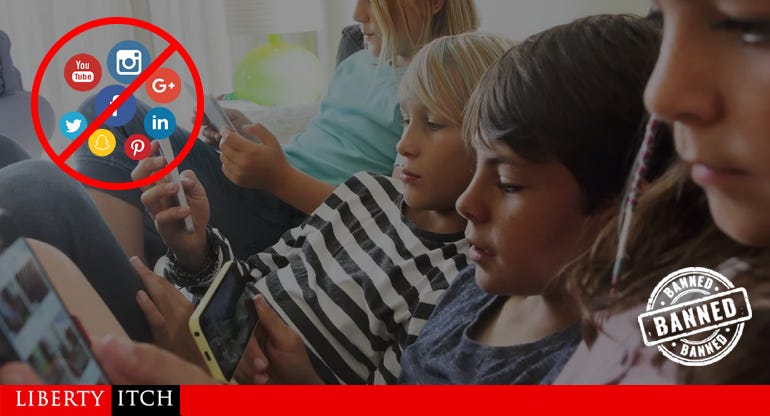
These policies present social media, and the internet as a whole, as ‘inherently harmful to children’.
This is ironic, given that only five years ago various state governments disregarded the welfare of children and teenagers in pursuit of the lockdown policy. I believe this policy is primarily driven by government ambitions to control and eliminate privacy on the internet.
Social media has the power to benefit and empower children and teenagers. To compare social media to vices such as alcohol, tobacco and gambling is a false equivalency; social media is not a vice but a tool which allows people to communicate and access information.
To restrict access to social media means restricting access to communication and information and is more comparable to restricting access to a library or a community centre.
Social media allows children and teenagers to increase communication with other children and teenagers. Those who live in a remote area or who have health conditions such as cystic fibrosis or are undergoing chemotherapy may otherwise have no opportunities to interact with people their age.
Rather than admitting failure the government will double down and the restrictions
Social media is also used by more politically involved teenagers to discuss politics and engage in political activity, and by youth to connect over shared interests or run a business. For example, I have a friend who runs a political roleplay Discord group which has some teenagers as members.
For websites that allow young people to pick a username that isn’t their real name, being able to experiment with their identity while remaining anonymous can be a source of empowerment. Such websites also allow young people to get advice on matters that are deeply personal such as sexuality or embarrassing personal matters.
This isn’t to say that there is nothing on social media and the internet that may be harmful for children, or at least certain children. As someone who grew up with the internet, I am very much aware of this. Yet I do not believe this justifies barring those under the age of 16 from social media and age-gating the internet.
I support some rules designed to protect minors on the internet. For example, if someone discloses that they are under the age of 18 when signing up for a website, I believe the account should automatically be set to the highest privacy setting with limits on data collection and addictive features such as doomscrolling. This would not impair fundamental rights nor be costly to implement for smaller websites.
One of the problems with the social media age restriction is that it does nothing to teach young people how to deal with unpleasant internet situations. In fact, it prevents them from practising that skill. The best way to help reduce ‘internet related harms’ is to educate children and teenagers on how to avoid and how to deal with them, just as teaching swimming reduces drowning and sex education reduces unwanted pregnancies. Increased tech literacy reduces harms on the internet.
In addition, I believe it is important to educate parents on ways they can protect their children and teenagers. A good example is the use of internet filters to restrict certain content or apps based on their child’s age, maturity and their child’s individual factors and family values.
The social media ban is currently being presented as a win for parental rights, but this is not the case. In fact, the ban deprives parents of choice and flexibility, restricting content based on government views rather than family values.
Parents face two choices - to comply with the government censorship even if it doesn’t reflect their values, or buy a VPN where they cannot restrict anything. They are deprived of the ability to give their children autonomy and freedom with no exception for parental approval. Which is ironic given parents in many Australian states have the freedom to give their children and teenagers alcohol on private property (which I don’t object to).
Restrict access to social media means restricting access to communication and information
The social media ban does nothing to help youth interact in person. It does not remove many of the major stressors that affect youth, such as fears over the future cost of living or the unreasonable demands for perfection due to factors such as cancel culture.
And right now there is still a lack of information about how exactly Australia’s social media ban and subsequent search engine restriction will be enforced. The eSafety Commissioner is still adding websites to the list to be affected by the social media ban and is picking winners and losers.
For example, at the time of writing this article, Kick is set to be added to the under 16s ban list yet Twitch will still be allowed despite being fundamentally similar to Kick.
I expect the 10th December to be a rather chaotic day, and this policy will be a disaster. Many under 16-year-olds will find ways to circumvent the ban, and 1 in 3 parents are currently planning to assist their teenagers in circumventing it as well. It will still be legal for those of age to assist under 16s in circumventing the legislation.
When this policy inevitably fails, rather than admitting failure the government will double down and the restrictions will become more authoritarian with time.

On this topic
https://open.substack.com/pub/zurkel/p/is-social-media-a-vice-and-is-being?r=1q6ig3&utm_medium=ios
"When this policy inevitably fails, rather than admitting failure the government will double down and the restrictions will become more authoritarian with time." - truer words have never been spoken.