


Australians are told that democracy means government by the people, for the people. Every few years we shuffle into polling booths, cast our votes, and supposedly determine the direction of our country.
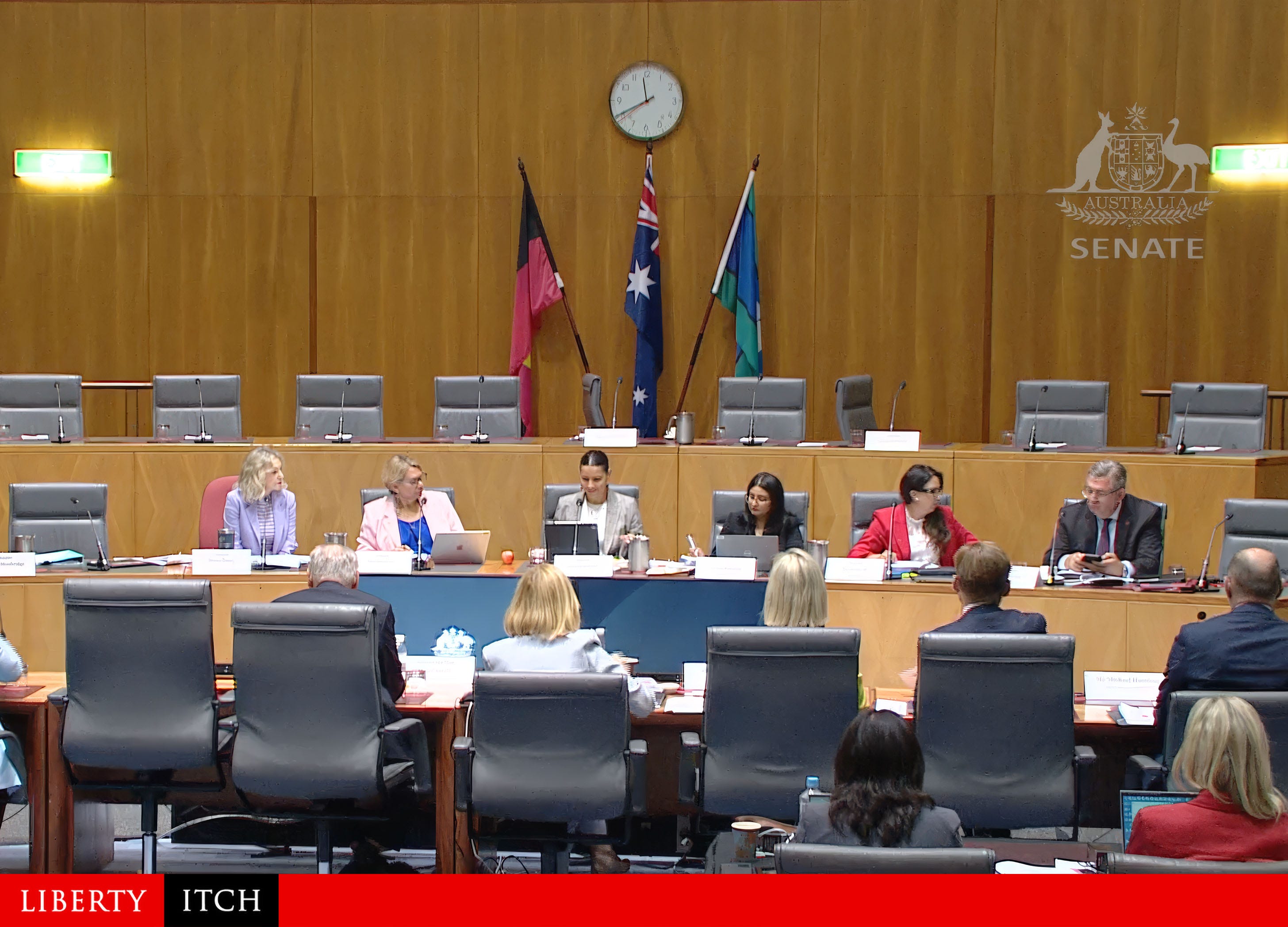
Governments rise and fall, ministers come and go, and political parties offer policies. Yet behind the revolving door of elected politicians sits an altogether more permanent class of rulers: the bureaucracy.
Unelected public officials can spend decades occupying the corridors of power, accumulating influence, cultivating relationships and mastering the machinery of government. While politicians operate on electoral cycles, senior bureaucrats can play the long game – why fight a reform you dislike when you can simply outlast the politician proposing it?
This is one of democracy’s great contradictions. We demand accountability from elected politicians while allowing enormous concentrations of administrative power to develop among officials who never face the voters.
It’s time libertarians demanded something radical: mandatory term limits for senior bureaucrats.
Nobody exercising substantial coercive government authority should enjoy an indefinite claim to power.
The problem isn’t that public servants are inherently malicious or incompetent, many are dedicated professionals. The problem is that bureaucracies, like every institution, develop interests of their own. Departments seek larger budgets, additional staff, expanded responsibilities and greater influence. When was the last time a government department recommend abolishing itself?
Public-choice economist William Niskanen explored how bureaucratic incentives can encourage budget maximisation. Unlike private businesses, government departments don’t face competition, bankruptcy or dissatisfied customers taking their money elsewhere. Instead, failure can become an argument for additional funding.
Politicians seeking to reduce expenditure, eliminate unnecessary regulation or abolish government programs consequently come up against institutions whose continued existence may depend upon resisting precisely those reforms.
Bureaucrats possess considerable advantages in that confrontation. They control information, prepare ministerial briefings, develop implementation plans and advise governments on what’s supposedly practical, affordable or legally achievable.
A determined bureaucracy doesn’t have to openly defy a minister. It can recommend another review, identify additional risks, request further consultation, or complicate implementation until the political opportunity disappears. It can also background the media on its thinking, inciting negative publicity about the minister.
Of course, not every delay constitutes outright obstruction, but the capacity for institutional resistance is undeniable.
In Japan, when the Democratic Party swept into government in 2009, it promised to wrest policymaking authority from the country’s powerful bureaucracy. Its efforts to restructure the relationship between elected politicians and career officials proved incomplete. Changing the government hadn’t fundamentally changed who controlled the machinery.
In the United States, Donald Trump’s attempt to reform employment protections for policy-influencing federal officials provides another illustration. His administration introduced Schedule F in 2020 only for Joe Biden to revoke it in 2021. Trump revived the policy upon his return to office, with implementation still progressing in 2026. The episode demonstrates how institutional arrangements and electoral cycles can frustrate attempts to reform the administrative state.
Australia is not immune. Our departmental secretaries were once permanent appointments. Today they’re generally appointed for terms of up to five years. Yet re-appointment and movement between senior positions still allows influential officials to accumulate decades within the executive establishment.
The principle is straightforward: nobody exercising substantial coercive government authority should enjoy an indefinite claim to power.
Placing a term limit on senior bureaucrats is about limiting the concentration of coercive authority.
I would allow a maximum of five years in designated senior policymaking, regulatory and executive positions, followed by compulsory rotation away from that function. This restriction should apply to departmental executives, senior regulators, policy directors and officials controlling major procurement or regulatory decisions.
Obviously, such a mandate should not apply indiscriminately to frontline staff such as nurses, teachers, police officers or ordinary administrative staff. The objective is to limit entrenched authority and paper-shuffling bureaucrats, not punish public service and expertise.
New Zealand already demonstrates that fixed-term senior public service leadership can co-exist with a professional bureaucracy. Its departmental chief executives serve appointments of no more than five years, although re-appointment remains possible.
Australian reform should go further by preventing endless recycling through equivalent positions, protecting independent merit-based appointments and staggering departures across electoral cycles.
Critics might warn that term limits would sacrifice institutional knowledge. However, knowledge shouldn’t become a hereditary title to authority. Proper succession planning can preserve expertise without preserving individual monopolies over decision-making.
Others will argue that greater political control would turn public servants into partisan lapdogs. Term limits must also prohibit political loyalty tests and prevent regulators from immediately taking lucrative positions with industries they previously supervised.
The point isn’t to give politicians unlimited power. The point is that politicians don’t own the political power they wield; it’s borrowed from the people. The same principle should apply to bureaucrats.
As libertarians, we distrust permanent political power because human beings respond to incentives, cultivate vested interests and become comfortable exercising authority over others. Placing a term limit on senior bureaucrats is about limiting the concentration of coercive authority.
If nobody should be entitled to govern forever, nobody should be entitled to administer government forever either.
