


I am delving into the epic poem, The Faerie Queene, by Edmund Spenser. This is no mean feat; it is epic in size and depth.
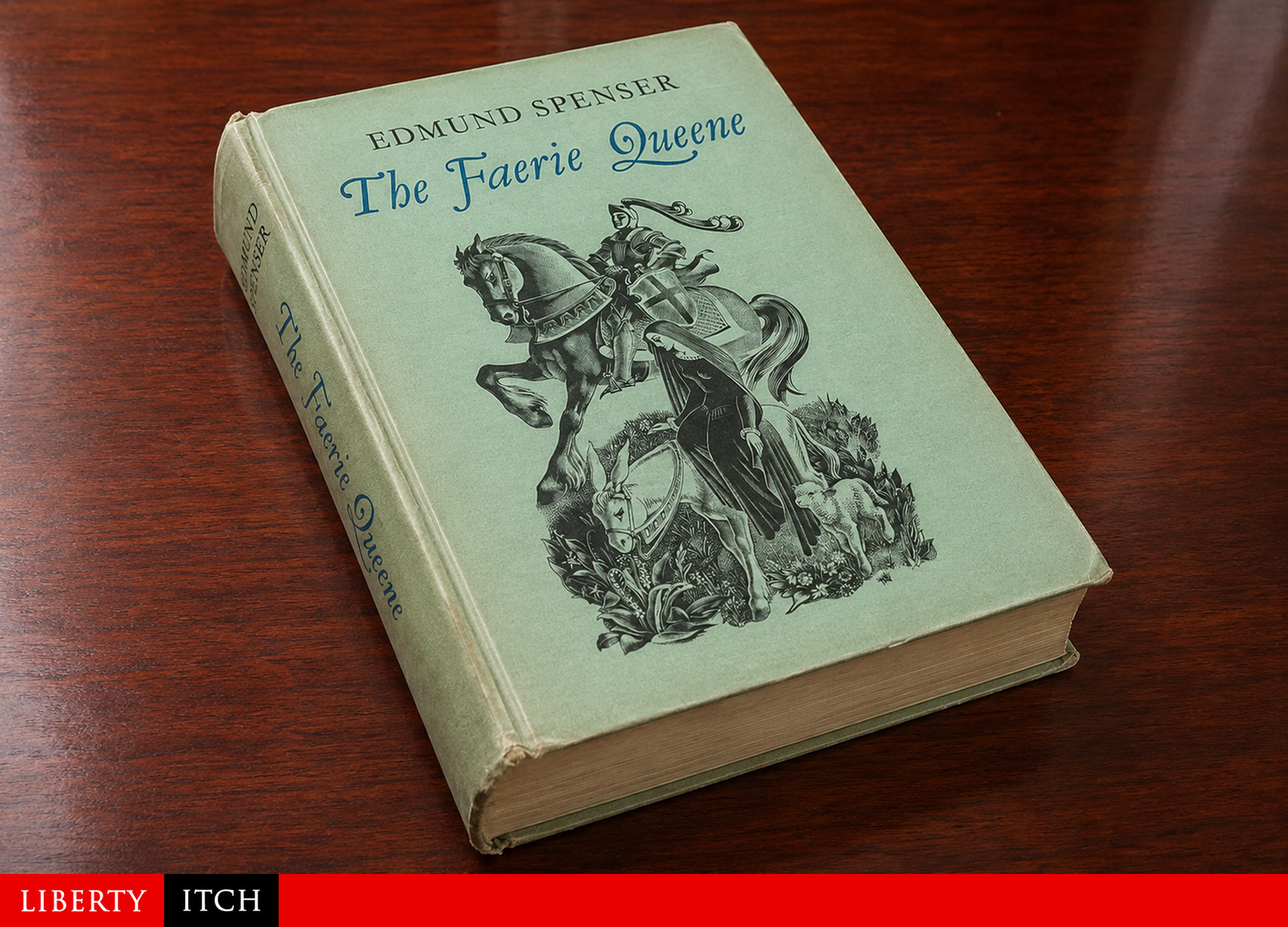
The book is fundamentally about virtue, and translates to how we confront the many challenges and temptations in our lives. Spenser uses the framework of mythical knights, who each have to face different trials. There are six books in total addressing a different virtue: Holiness, Temperance, Chastity, Friendship, Justice, and Courtesy.
I am focusing here on just Book Two - Temperance.
According to my trusted Roget’s Thesaurus, the word, temperance, means:
Sedateness
Sobriety
Restraint
Cardinal virtues
Temperance is one of the four cardinal virtues of classical philosophy, with the others being prudence, justice and fortitude. They were regarded as the structural conditions of a well-ordered life by Aristotle, Cicero and Aquinas. Without them, no person or polity could function with genuine dignity.
Prudence governs the mind’s judgement; justice governs our relationships; fortitude governs our response to danger and suffering; temperance governs our ability to restrain from the temptations of excess and move to a more ordered life under reasoning.
Spenser places temperance at the heart of Book Two of The Faerie Queene, as the lens through which to examine what happens to human dignity when self-rule collapses. The knight at the centre is Guyon, who is faced with the challenges of extremes and disorder. This story is an apt allegory for the disorders of any age, including, and perhaps even more so, for our own.
We don’t hear much about temperance in the modern age, but it is strongly associated with the Arthurian legends – the world in which Spenser has based his book. However, my focus is not King Arthur’s realm, but our contemporary one, specifically as it relates to our political class. Just imagine if it was required of them to attend classes in the Art of Temperance!
It is not out of spite I highlight politicians; it is in service to what we ought to all hold dear in our democracies – a sense of fairness, duty and a good dose of honour. Sadly, democracy in the West is now more in name only, as we watch the whole edifice crumble from lack of effective democratic leadership, and deteriorating economies.
We can only imagine the time and effort it took to produce this poem; how much fortitude was required to stay with it. The patience Spenser would have had to complete it would surely leave the modern mind in a spin.
We live in times where many politicians do not even read proposed legislation put in front of them, never mind the concept of writing a book of almost 1300 pages, roughly 300,000 words, taking about 15-20 years to complete. That is dedication – a virtue in itself.
To be fair, however, politicians have little say on the finality of legislation which is dictated by Ministers and the party rooms of major players. Independent members, or those of minor parties, do have a massive challenge with regard to the time spent reading copious amounts of legislation, and working directly with their constituents.
The point I am making here is to lament how we fail to regard detail when it is detail that can often make the difference in lives. Not to suggest we can all write an epic poem, but we can take those exemplars and their dedication, and apply it to the best degree possible in our own lives and polities. How this relates to my political analogy in a libertarian sense, is that the state should aim for less legislation rather than more. Perhaps then, more of the detail can emerge from the darkness.
The stanza I address here has nothing to do with politics. But it does have everything to do with the nature of mankind, how we conduct ourselves in life generally, and when under immense pressure. I argue that the link is a natural one to make.
I doubt anyone would deny that too many politicians ignore the will of the people who they represent, and I venture to say it has gone further, now being a case of indifference. It is entirely within reason to connect the individual with the office they hold, given that the decisions they make affect every aspect of our lives.
Let’s begin with Spenser’s original words:
Of all Gods works, which do this world adorne,
There is no one more faire and excellent,
Then is mans body both for power and forme,
While’s it is kept in sober gouenment;
But one then it, more fowle and indecent,
Distempred through misrule and passions brace:
It growes a Monster, and incontinent
Doth loose his dignities and natiue grace,
Behold, who list, both one and other in this place.
Of all the works God created, there is none fairer than the human body, both in strength and form – form in an Aristotelian sense: not merely shape, but that which orders our sense of reason, will, and passions. While we manage to keep it in a steady state, it is sublime. But if we allow it to become unchecked and unruly, it becomes something foul and indecent; like a monster that loses its entire dignity and native grace. If you look here, you will see both conditions side by side.
Read in 2026, it is not difficult to hold this up as a mirror to our current political class. Spenser’s “sober government”, as he applies it to our own body and form, can be applied just as well to that which we increasingly lack in public life – a true sense of honour among those who are meant to serve us, not rule over us.
There is nothing sober about a government that allows itself to become deformed through the tendency to tyrannical rule.
Why did I choose an epic poem to use as an allegory for modern politics? Because it matters as we navigate our way through these turbulent times, unsure if the world we know will land on its feet or adopt a whole new persona. What better way to hold a mirror up to our lost and rambling ways than to move through enchanted forests, courts and battlefields where every monster, castle, challenge, and temptation figures something we already know?
Why else do we gravitate to the wonder of times unknown but merely dreamt of?
