

“Government after government has declared war on property investors. Renters are about to discover who really loses that fight.”
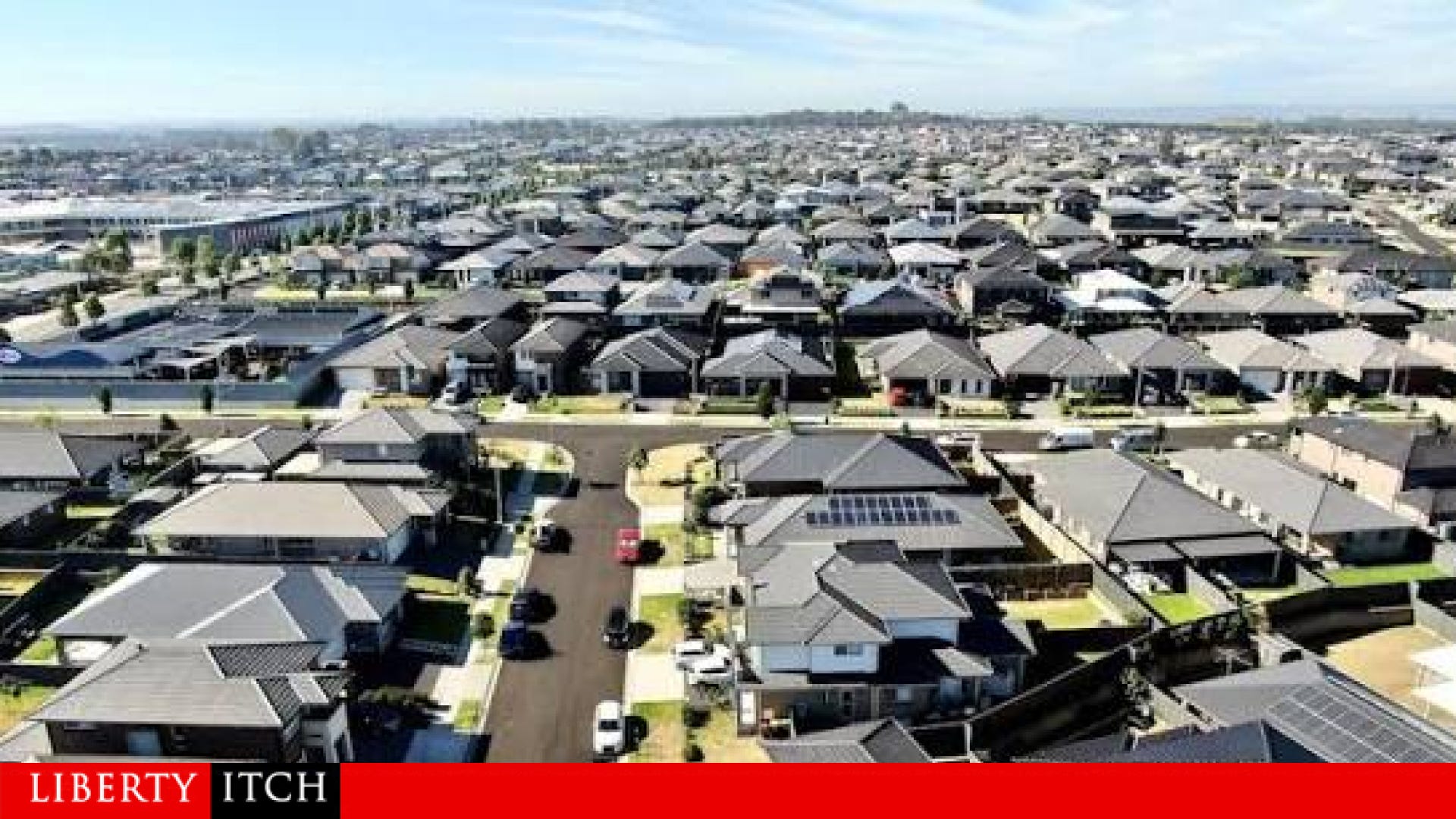
Australia is about to learn a lesson that should have been obvious from the beginning: if you punish the people who provide rental housing, eventually they stop providing rental housing.
Who could possibly have seen that coming?
For years, both Labor and Liberal governments have searched for villains to blame for the housing crisis: developers, landlords, investors, negative gearing, capital gains concessions. Everyone except the people making housing harder, slower and more expensive to build.
Now we are watching the predictable consequences unfold in real time.
Across Australia, governments have systematically increased the cost, complexity and risk of owning investment property. Higher interest rates; more taxes; more compliance requirements; more regulations; more paperwork; more restrictions.
Then they stand before the cameras and wonder why investors are heading for the exits. It’s like smashing every window in your house and then complaining about the draft.
The uncomfortable truth is that private investors provide the overwhelming majority of Australia’s rental housing. Around one-third of Australians rent privately. Only a small fraction live in public housing.
That means every time an investor decides the game is no longer worth playing, the rental market loses another provider. Fewer rental properties, more tenants competing for them, higher rents.
Australia isn’t suffering from a housing shortage. It’s suffering from a shortage of politicians who understand incentives.
This is not advanced economics; it’s Year 9 supply and demand. Yet somehow Australia’s political class continues to behave as though supply and demand are optional theories rather than economic reality.
Victoria provides perhaps the best example of how not to run a housing market. The state already has some of the highest property taxes in the country. Landlords face growing compliance obligations, increasing minimum standards, and mounting costs. Some of these standards are reasonable where they relate to genuine health and safety concerns, but increasingly they have crossed the line from safety into bureaucracy.
Properties that fail to meet each new requirement face expensive rectification works before they can be rented again. Some owners will comply; others will sell. Some will simply leave properties vacant because the compliance costs exceed the returns.
The result is exactly the same: less housing, more competition, higher rents.
And while governments lecture investors about their social obligations, they seem remarkably uninterested in the incentives that drive investment decisions in the first place.
The modern Australian approach to housing policy appears to be based on a simple formula. If something works, regulate it. If it survives regulation, tax it. And if it survives taxation, regulate it again.
Then establish a parliamentary inquiry to investigate why nobody wants to invest anymore.
Meanwhile, demand continues to surge and Australia’s population keeps growing.
Housing construction struggles under labour shortages, builder insolvencies, planning delays, infrastructure bottlenecks and endless layers of government approval. Governments keep turning on the demand tap while sitting on the supply hose. Then they act shocked when nothing comes out.
Rental vacancy rates remain near historic lows. In many suburbs prospective tenants are competing against dozens of other applicants. Families with stable employment and solid incomes are attending inspections alongside forty or fifty other hopeful renters.
That is not a healthy market; it is a market screaming that supply is nowhere near demand.
Yet rather than asking how we can build more homes, the political debate revolves around how many more obstacles can be placed in front of the people willing to provide them. This is where the major parties reveal how little separates them.
Labor’s instinct is always more regulation, more intervention and more control. The Liberals talk a better game but rarely reverse Labor’s policies once they’re in place. Too often they merely manage the machinery built by Labor rather than dismantle it.
The result is what many Australians increasingly recognise as the Uniparty. Different slogans. Different press conferences. The same underlying assumption that government knows best.
A genuinely libertarian perspective starts from a different premise. Investors are not charities. Developers are not charities. Builders are not charities. People respond to incentives.
If government makes housing investment less attractive, less profitable and more risky, the market will produce less housing. That is not greed; it is human nature.
The next phase of this experiment is already becoming visible.
Higher borrowing costs, changes to capital gains tax treatment, restrictions on investment structures, increasing compliance obligations and ongoing regulatory uncertainty are steadily eroding the attractiveness of residential property investment.
Perhaps each one of these measures could be defended individually. But housing markets do not operate on individual policies; they operate on cumulative incentives. And the cumulative message being sent to investors is crystal clear: take your money elsewhere.
Australia’s political class continues to behave as though supply and demand are optional theories rather than economic reality.
Rental housing does not magically appear when investors leave. Governments certainly are not building enough homes to replace them. Public housing waiting lists are already stretched. Construction activity remains constrained. New dwelling completions are struggling to keep pace with population growth.
The maths simply doesn’t work.
The greatest irony is that many of the policies being sold as solutions to housing affordability may ultimately make housing less affordable for the people who rent.
Politicians keep confusing home ownership with housing supply. They are not the same thing. A property does not become more affordable because an investor is driven from the market. The number of houses has not increased. The number of people needing somewhere to live has not decreased.
All that changes is the number of rental properties available. And when that supply shrinks, renters pay the price.
Australia’s housing crisis will not be solved by demonising investors. It will not be solved through more taxes, more regulations or more political grandstanding. It will be solved by building more homes.
That means freeing up land, cutting planning delays, reducing barriers to development, encouraging private investment, and recognising a simple truth that both major parties seem determined to ignore. Housing supply comes from incentives, not slogans.
The people who suffer the most will be the young couple attending their tenth rental inspection; the single parent competing against fifty other applicants; the family forced further and further from work, school and community because there is simply nowhere affordable left to rent.
Australia isn’t suffering from a housing shortage. It’s suffering from a shortage of politicians who understand incentives.
“You can’t regulate, tax and punish your way to more housing any more than you can regulate your way to rain during a drought.”
"The modern Australian approach to housing policy appears to be based on a simple formula. If something works, regulate it. If it survives regulation, tax it. And if it survives taxation, regulate it again".
One minor clarification: the above approach applies to everything in Australia, not just housing!
Excellent article. This is one of the clearest and most accessible explanations of the rental crisis that I have read in years.
It succeeds because it focuses on the one thing politicians and commentators too often ignore: incentives matter.
If you tax, regulate and discourage the people who provide almost all of Australia's rental housing, you should not be surprised when fewer people are willing to provide it.
That isn't ideology. It's economics.
This article explains in plain English what generations of economists from Adam Smith through to Milton Friedman and Friedrich Hayek understood intuitively: individuals respond to incentives and markets respond to prices.
The tragedy is that Australia appears determined to learn this lesson the hard way.
With investor confidence collapsing, approvals falling, construction slowing and population continuing to grow, the mathematics are becoming frighteningly simple. We are potentially staring at an increase of thousands of Australians entering housing insecurity and homelessness every month if supply continues to fall behind demand.
Most importantly, articles like this help move libertarian ideas from abstract philosophy into practical public policy.
Libertarianism is often caricatured as theory. Housing demonstrates that it is simply realism.
🏡 Encourage investment and more housing gets built.
🏡 Punish investment and less housing gets built.
The market isn't being cruel. It is simply responding to incentives.
Every article like this helps Australians understand that prosperity is not created by slogans, envy or political theatre, but by incentives, investment and production.
That is how libertarian ideas gain acceptance.
That is how public opinion changes.
And ultimately, that is how Australia becomes a more prosperous, affordable and humane place to live.