


Recent political campaigns frame social media and even the internet itself as a vice comparable to tobacco, alcohol, and other age-restricted products and activities. This is used to argue in favour of invasive identity verification to prove we are not under a certain age.
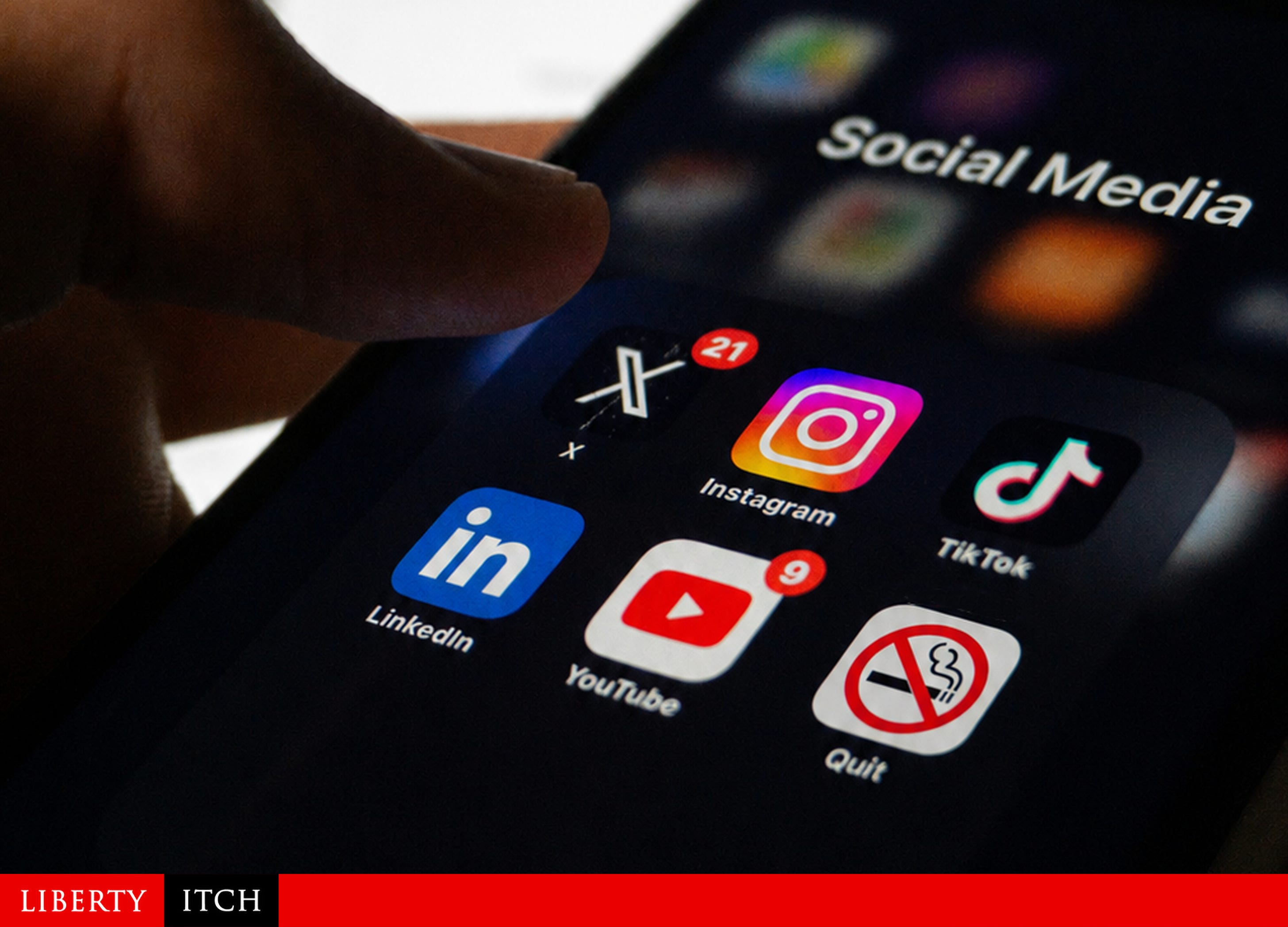
Tobacco provides little benefit to the user other than temporary pleasure, while increasing health risks for the user. Social media, on the other hand, is both a mode of enjoyment and a digital extension of the public sphere. People use social media to socialise, stay in touch, do business, communicate with employers, access news, and participate in public life.
Similarly, comparing social media to bars and drinking is not a valid comparison because, in many jurisdictions, minors are allowed in bars (at least during daylight hours) and the only restriction is buying alcohol. Many jurisdictions allow minors to drink on private property.
Some even allow them to drink at a pub with parental permission. For example, my first ‘pub drink’ was at an outdoor bar in Wellington New Zealand when my mum bought a jug of beer to share with 16-year-old me and my then 15-year-old brother. Isn’t it ironic that parents have more control over whether their children can access an actual vice than social media and the internet?
To further the irony, the process of ordering alcohol online is far less invasive than the online identity verification processes for social media. I just show my ID when I receive or pick up my package. This shows the important distinction between showing ID to buy alcohol and tobacco, and uploading an ID online to use social media. Unlike flashing my ID in person, uploading an ID online creates a digital record that can be tracked and recorded, and is capable of being leaked.
For the government, forcing people to attach their identity to every online account allows the government to better track and target people on the internet.
Despite this, some will argue that social media has addiction potential. However, something with addiction potential does not automatically make it a vice that requires age-gating. Food also has addiction potential, yet no reasonable person would consider it a vice. Like with food, people simply need to learn self-control to use social media in a healthy way, a process better started at a younger age and under parental supervision.
Another common comparison is with driving, meaning people need to obtain a certain level of maturity to do it safely. Though there is some merit to this argument, I would argue that social media is different as the act of driving can create fatal hazards to others and young people can easily participate in society without driving.
I regard the sudden focus on social media as a ‘social evil’ as bizarre and downright suspicious. I do not believe social media is responsible for our current social ills, but rather it gives greater visibility and awareness to the current problems within our society.
I do not accept it is the biggest issue facing younger people, or primarily responsible for their current anxiety and poor wellbeing. In fact, I would argue the current distress of young people is caused by factors such as:
The cost of living. Many young people fear they will have a lower standard of living than their parents and will be poorer than them.
Unaffordable housing and a highly competitive housing market. Many fear they will never be able to own a house and will struggle to find a rental.
Difficulty in finding employment and a highly competitive job market.
The fact that higher education no longer guarantees success. Younger generations were told that university would guarantee a job and success, but it didn’t.
A culture war that frames complex and nuanced issues in a black and white manner with little to no tolerance for deviation from either extreme position.
The ever-present threat of personal and financial ruin over minor and non-existent transgressions (cancel culture) and unrealistic demands of perfection. There is no empathy, mercy or forgiveness, and many young people do not remember a world without cancel culture.
The pointless suffering of younger generations due to pandemic policies that young people are not allowed to complain about even to this day.
The systematic alienation of young men.
Lack of affordable activities. For example, going to the movies is far more expensive than it used to be. Going out in general is far more expensive than it used to be.
Less privacy and freedom compared to previous generations.
Less outlet for escapism. A lot of creative media has been injected with polarising politics and people are increasingly unable to explore and process thoughts and fantasies that are socially unacceptable.
Lack of hope for and concern about the future.
I find the sudden drive for legally mandated identity verification to be driven not by any genuine desire to protect the welfare of children and young people, but by government and corporate interests.
For the government, forcing people to attach their identity to every online account allows the government to better track and target people on the internet, including political dissidents, whistleblowers and anyone else the government doesn’t like.
For Big Tech companies, it allows them to more closely track and collect more data on their users. Big Tech has been under pressure from advertisers for at least the past ten years to ensure that paid advertisements are seen by real people rather than bots. Personal data has become incredibly financially valuable. Data brokers that buy and sell data and data centres that store and process the data also profit from this data-based ecosystem.
The requirements are financially crushing for smaller competing websites, which means less competition and more control for Big Tech. Connecting real identities to internet accounts also allows the government and Big Tech to more easily exclude targeted individuals and groups from the internet.
Although it is reasonable to age-gate activities such as smoking, drinking and driving, to compare such restrictions to social media age restrictions is a false equivalency driven by far more insidious intentions.
