


The Commonwealth Parliament, powered by a collusion of both major parties, has rammed through the Combatting Antisemitism, Hate and Extremism (Criminal and Migration Laws) Act 2026.
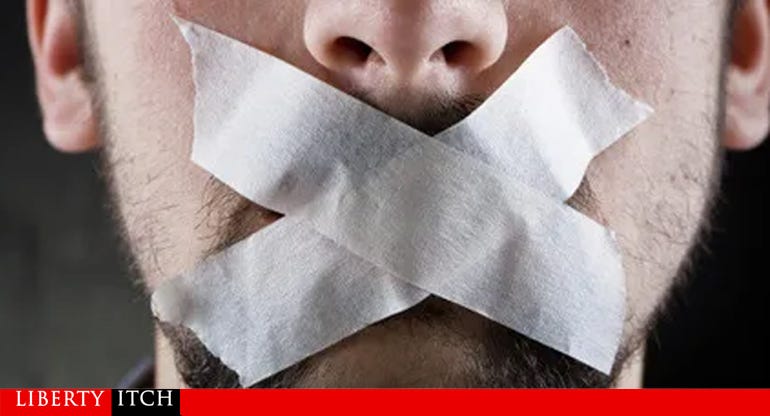
This law, cynically marketed as an antisemitism measure following the Bondi Beach shooting on 14 December, is in truth a draconian assault on freedom of speech.
If you’re wondering how the “uniparty” managed to draft, debate and pass such comprehensive legislation within 6 weeks, many commentators and analysts are convinced the measures were already conceived, awaiting a prime opportunity.
Unelected bureaucrats, at the behest of an initially reluctant Labor Government, dusted off the draft, sprinkled in references to antisemitism, and the Liberals gave their blessing.
The subsequent political fallout for the so-called “Liberal” Party doesn’t come as a surprise. The Liberal Party is no longer the liberal political movement they once claimed to be. Justifiably, the Nationals aren’t interested in a coalition partner that has abandoned its principles by supporting laws that are completely antithetical to its stated values and platform.
As the Institute of Public Affairs’ Daniel Wild so succinctly put it, this was “an act of bipartisan cowardice, and a failure of our political leaders which has left Australia less free, less safe, and less unified.”
It is a bitter betrayal by those who claim to safeguard our liberties. While primary blame lies with the Labor Government for concocting such appalling laws, the Liberal Party’s complicity is especially disgraceful given its supposed commitment to free speech and individual freedom. As is often the case, hypocrisy amplifies the backlash.
Free speech is not a gift from government; it’s a birthright that we must constantly defend from governments of all stripes.
The substance of the new legislation is as frightening as its passage was fast. Branded as targeting neo-Nazis and jihadists, the sweeping provisions empower the government to ban organisations, jail speakers, and even deport individuals for speech or associations – all under disturbingly vague pretexts.
The laws grant Home Affairs Minister Tony Burke (oh dear) the power to declare, at will, any organisation a prohibited hate group. No conviction required, no procedural fairness, and it can even be done retrospectively.
The definition of a hate crime in this legislation is so elastic and subjective that it veers into thoughtcrime. It includes any conduct that “would, in all the circumstances, cause a reasonable person who is the target, or a member of the target group, to be intimidated, to fear harassment or violence, or to fear for their safety”. Note the conditional “would” cause – no actual harm or intimidation need be proven. A person can be imprisoned for up to 15 years for speech that authorities believe might make someone feel afraid. Whatever happened to proving intent?
Key terms like “hate group” and “hate crime” are defined with breathtaking vagueness, practically begging for abuse. A “hate group” under the Act is essentially whatever the government says it is – any organisation the Minister declares to be one. Add to that, our security agencies need only be “satisfied” that a group’s activities are likely to increase the risk of politically motivated violence. I’m sure they’ll be very satisfied. Such open-ended powers are a tyrant’s dream.
These examples barely scratch the surface of a law so broad and “unintelligible” (in the words of Greg Barns SC, of all people) that even legal experts are alarmed.
Attorney-General Michelle Rowland absurdly insists the law is “tight” and precise, yet Home Affairs Minister Tony Burke said the government “would have liked the laws to be even stronger”. If this is their idea of restraint, one shudders to think what an “even stronger” version would look like.
The notion of “hate speech” as a legal category is inherently ripe for abuse. It hands to the government the power to arbitrate truth and permissible opinion. As Dr Jordan Peterson famously warned, whether or not something you’ve said is defined as hate speech gets determined by “the last people in the world you would want” defining it.
Hate speech regulation means empowering politicians, unelected bureaucrats and ideological elites to police discourse, and those are exactly the people most likely to misuse that power to silence dissent.
Today our political leaders tell us these laws are essential, and will only be used against neo-Nazis and jihadist extremists. But once the machinery of censorship is in place, it will not stop at the obvious villains. It never has. Indeed, when “hate” is whatever the ruling class hates to hear, any passionate political speech can be painted as extremism. The history of free societies teaches us that the answer to hateful speech is more speech, not empowered censors.
The Liberal Party is no longer the liberal political movement they once claimed to be
The passage of these new laws is a dark day for Australian liberty: laws ushered in by an establishment tag-team of left and right authoritarians. The uniparty has shown its willingness to sacrifice fundamental freedoms on the altar of combatting speech it hates.
It’s not a partisan issue. Whether they’re blue, red or green, all authoritarians pose a threat when they agree on gagging the public “for our own good.” It seems the fight for free expression in Australia will now have to be waged against the entire political class.
It’s incumbent on all of us to defend the principle that no government has the right to regulate thought and speech. Free speech is not a gift from government; it’s a birthright that we must constantly defend from governments of all stripes.
The events of this fortnight prove that the fight for freedom is never won, the struggle continues. Let this blatant betrayal by the uniparty serve as a rallying cry: if we want Australia to remain a free and open society, we’ll need to claw back our right to speak freely – before there’s nothing left to say.
