


“Step into my parlour, said the spider to the fly …
No, no, said the fly, to ask me is in vain,
For whoever goes up your winding stair,
Can ne’er come down again.”
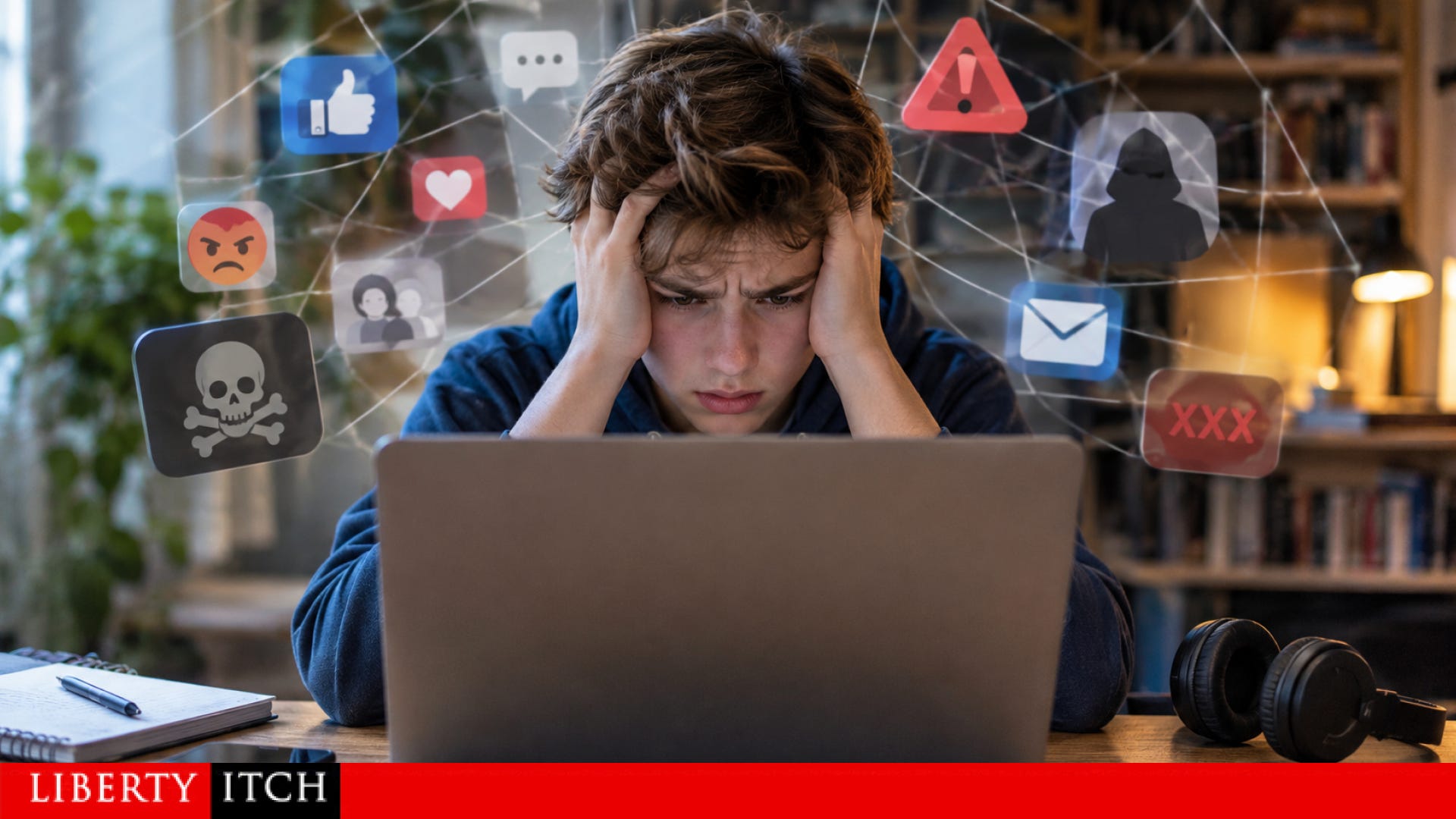
Mary Howitt’s old poem could well be describing another web – one that has ensnared us all – the World Wide Web.
Every aspect of our lives is now connected to the Web, and it is because of this Web that we are now in the predicament we’re in.
We have all been caught, and to quote Mary Howitt, we’re ‘ne’er coming down again’.
The internet has become the new Wild West.
There is a connection between mental health and social media. Violent computer games are said to affect boys. Cyber bullying can be deadly for girls. Sexting is rife. Online sexual predators are pervasive. Terrorist radicalisation and organised crime recruitment are real.
So, how best to respond? Do we try to control it or do we inoculate ourselves against its effects?
Any suggestion the global behemoths who dominate the world wide web should, or even can, do anything other than act in their own interests is naïve.
Also, things are changing so profoundly – in social attitudes, world economics, and especially technology – it is clear that politicians and bureaucrats are hopelessly ill-equipped to manage it. They not only lack the skills, but are outdated and outgunned.
We can’t trust politicians, bureaucrats and regulators to even know what misinformation is, let alone protect us from it.
Politicians, public sector bureaucrats and regulators who think they can control the internet are either delusional or dishonest. They are bullies when it comes to ordinary citizens but know they’re no match for when it comes to tech giants.
Listening to Australian politicians and regulators saying things such as, “We’re going to introduce codes of conduct” or “We are going to increase fines and other penalties” or “We’re going to set up specialist units within the ACCC to better understand how their algorithms work” or “We are going to give more power to the ‘eSafety Commissioner’ is laughable.
As for academics suggesting, “We need to bring them into public ownership. Nationalise them. They need to be subject to democratic, not market, control”, if you thought the owners of these tech giants were controlling, imagine them being owned and run by politicians and bureaucrats!
Governments have attempted – and in many cases, succeeded – in convincing people that, if they were just given more power, they would protect citizens from all types of harm.
The digital world is the epitome of that false promise.
Citizens and businesses must learn to protect themselves.
In 2024, the Albanese Government attempted to introduce the ‘Combatting Misinformation and Disinformation Bill’ to provide the media regulator – the Australian Communications and Media Authority (ACMA) – with ‘new powers to combat online misinformation and disinformation’.
The proposed new Bill, the Communication Legislation Amendment (Combatting Misinformation and Disinformation Bill), also provided for significant penalties for digital platforms or individuals that do not comply with the Bill and/or the new codes and standards that the Bill creates.
The government, of course, would not be subject to any of these new laws as it has exempted itself. No surprises there.
And in case anyone was thinking that this is solely a Labor Party contrivance, before the 2022 election, the Coalition pledged to, ‘… introduce stronger laws to combat harmful disinformation and misinformation online by giving the media regulator stronger information-gathering and enforcement powers.’
To cap it all off, waiting in the wings is ‘mal-information’, defined as ‘truth which is used to inflict harm on a person, organisation or country’ and ‘information that stems from the truth, but is often portrayed in a way that misleads and/or causes potential harm’.
If and when the ‘Combatting Misinformation and Disinformation Bill’ becomes law, all the Government has to do is label something ‘misinformation’ or ‘disinformation’ or ‘malinformation’ to have it shut down.
Every aspect of our lives is now connected to the Web, and it is because of this Web that we are now in the predicament we’re in.
Together with the Government’s ‘Online Safety Act’ and its ‘Digital Duty of Care’, these freedom-sapping pieces of legislation will become a mechanism for suppressing legitimate political speech and will see personal freedoms deteriorate markedly.
When the Yes side didn’t win the Voice Referendum, ‘misinformation’ was immediately blamed.
‘Yes’ campaign director Dean Parkin said the referendum result was due to ‘the single largest misinformation campaign that this country has ever seen’.
We can’t trust politicians, bureaucrats and regulators to even know what misinformation is, let alone protect us from it.
Citizens must protect themselves.
In this regard, there is one institution that has stood against all this for thousands of years – the family. The family can do a lot to help combat the lawlessness of the digital jungle and its predators. The family is the ideal place to start – to start building relationships, learning who to trust, who not to trust, who to communicate with, who not to communicate with.
Society has three levels of protection against harm. Level one is a person’s own conscience; level two is the family to keep its members in check; and level three is the police to enforce legislation.
More focus on level two, the family, would be a good start.
