


In August this year, SunRice laid off 68 workers at its mill in Deniliquin and 10 in Leeton. The Deniliquin mill is the largest in the country but is now operating at a fraction of capacity. Last year’s rice harvest was the smallest in six years, and there was no drought.
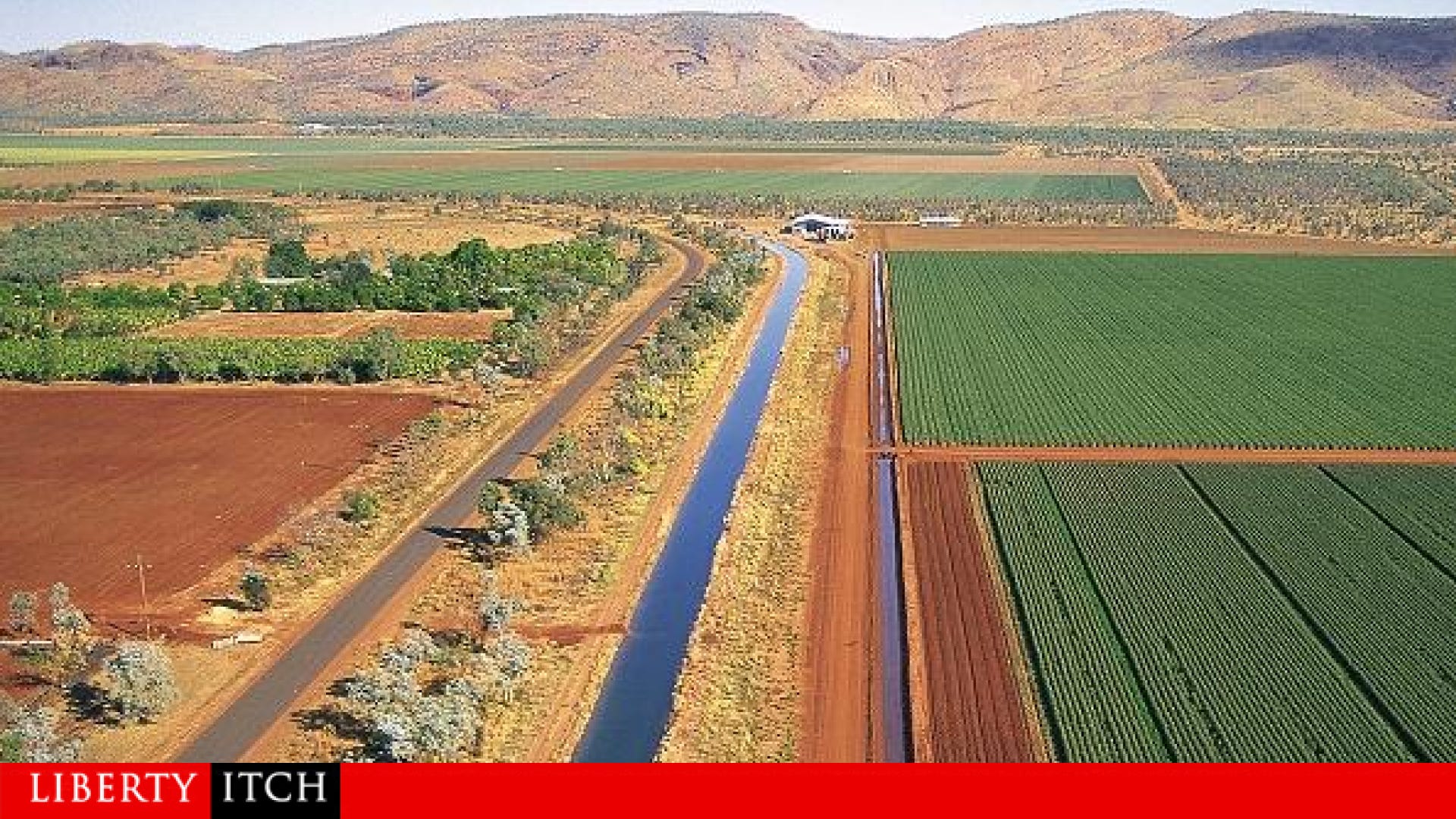
SunRice says the low crop production was due to the government buying water entitlements, noting that a third of the water available for irrigation a decade ago is no longer available.
It’s a similar story in the cotton industry. Production in New South Wales and Queensland is down due to the cost and shortage of water. Again, there is no drought.
From Queensland to Victoria, agriculture is being strangled by the loss of irrigation water. Farmers cannot sell what they can’t grow. There are social consequences too: job losses in country towns like Deniliquin, with a population of just 7,500, mean workers leave the town, sporting teams lose players, volunteer fire brigades lose members, and schools lose students.
The Albanese government is reported to have offered to help the affected workers and to co-invest in a rice cake facility. But this is band aid thinking - what the industry really needs is more water, not more socialism.
This would reinvigorate the Lower Lakes and keep the Murray mouth open while reducing the loss of fresh water to evaporation.
The cause of the lack of water is the Murray Darling Basin Plan, an outcome of the Millennium Drought, the longest and most severe drought for a hundred years. It prompted panic about climate change and led some to conclude that drought was the new normal, water would always be scarce, and the environment was facing catastrophe.
That drought ended in 2010/11 with widespread flooding, recovery of wetlands, birds breeding enthusiastically, frogs and fish proliferating, and the cycle of life resuming as it has for thousands of years.
However, during the drought a plan was devised, first by the Howard government and then by Rudd, to remove water from agriculture to ‘save’ the environment. Details were negotiated against a background of panic over the drought, state bickering over water sharing, and marginal seats in South Australia. The result was 1% science and 99% politics.
The plan’s main target was for the ‘return’ of 2,750 GL of water to the environment via efficiency measures and water rights purchased from farmers. It commenced in 2012 and has now been largely achieved. However, South Australia vehemently argued that 2,750 GL was not enough to save the Lower Lakes, the Coorong, and the Murray Mouth from ecological collapse. With seats at stake, a further target of 450 GL was added in a second phase. Buybacks to achieve this are now in progress.
Overall, more than seventy percent of basin river flows are now being directed to the environment, based on the theory that water is all the environment requires. The problem is, the environment only benefits when the water is in the right quantities, in the right place, at the right time. It can actually be harmful when that is not the case. This is now being recognised.
The Murray-Darling Basin Authority’s 2025 Basin Plan Evaluation states: “When the Basin Plan commenced it was assumed that water for the environment to key sites would be sufficient to maintain ecological health across the Basin. We have learnt it is more complex and challenging than this.”
The Plan guarantees South Australia a minimum of 1,850 GL of water a year. However, the state’s total water consumption is just 1,000 GL per year, of which agriculture consumes three-quarters. Adelaide, which mostly draws its water from the Murray, only consumes about 200 GL per year. It also has a desalination plant capable of producing 100 GL per year.
As for ‘saving’ the Lower Lakes, the Coorong and Murray Mouth, this is not dependent on how much water is sent across the border into South Australia. These problems are a result of human intervention.
Lake Alexandrina and Lake Albert, known as the Lower Lakes, were originally a mixture of salty water from the sea and fresh water from the Murray, in common with all the other estuaries in Australia. However, in the 1930s five barrages were erected to prevent the entry of the sea, keeping them artificially fresh. These barrages prevent tidal flows from keeping the Murray mouth open, which has become heavily silted.
Moreover, beginning more than a century ago, South Australia converted huge areas of boggy ground in the south-east into productive farmland by draining it of water and salt. This was directed out to sea rather than into the Coorong (an estuarine coastal lagoon) where it had previously trickled. The substantially reduced runoff into the Coorong has had a very deleterious effect on its health.
Details were negotiated against a background of panic over the drought, state bickering over water sharing, and marginal seats in South Australia.
An additional issue is that, whereas evaporation from the Lower Lakes would once have been a mixture of fresh water and seawater, the barrages ensure it remains entirely fresh. This is estimated to be about 900 GL of water a year, worth $2-3bn at typical water trading prices. Most of it originates from rural communities in Victoria and NSW, including Deniliquin.
There are a few aspects about the Murray Darling Basin Plan that are worth preserving, in particular the creation of a water trading market. However, much of it needs to change.
Obviously, the South Australian government should demolish the barrages and allow the Murray to flow free to the sea. This would reinvigorate the Lower Lakes and keep the Murray mouth open while reducing the loss of fresh water to evaporation.
To protect Adelaide’s water supply in drought years, it needs to build a weir across the Murray near Wellington. To restore the Coorong, it should commence a program of returning south-east drainage water to it.
Most importantly, water buybacks should cease. Moreover, the Commonwealth Environmental Water Holder should sell a considerable amount of the water it holds to farmers, to use in productive agriculture. And as for the environment, it’s time its health was assessed by objective, measurable criteria, not by politically motivated water targets.

sounds more like -1% and 101% science and politics were applied!