


In this year’s Victorian state election, next year’s NSW state election, and the federal election in 2028, plenty of voters will find the whole process a serious inconvenience. They won’t care who wins, won’t know who the candidates are, won’t know which parties are running, and won’t vote for anyone based on their policies.
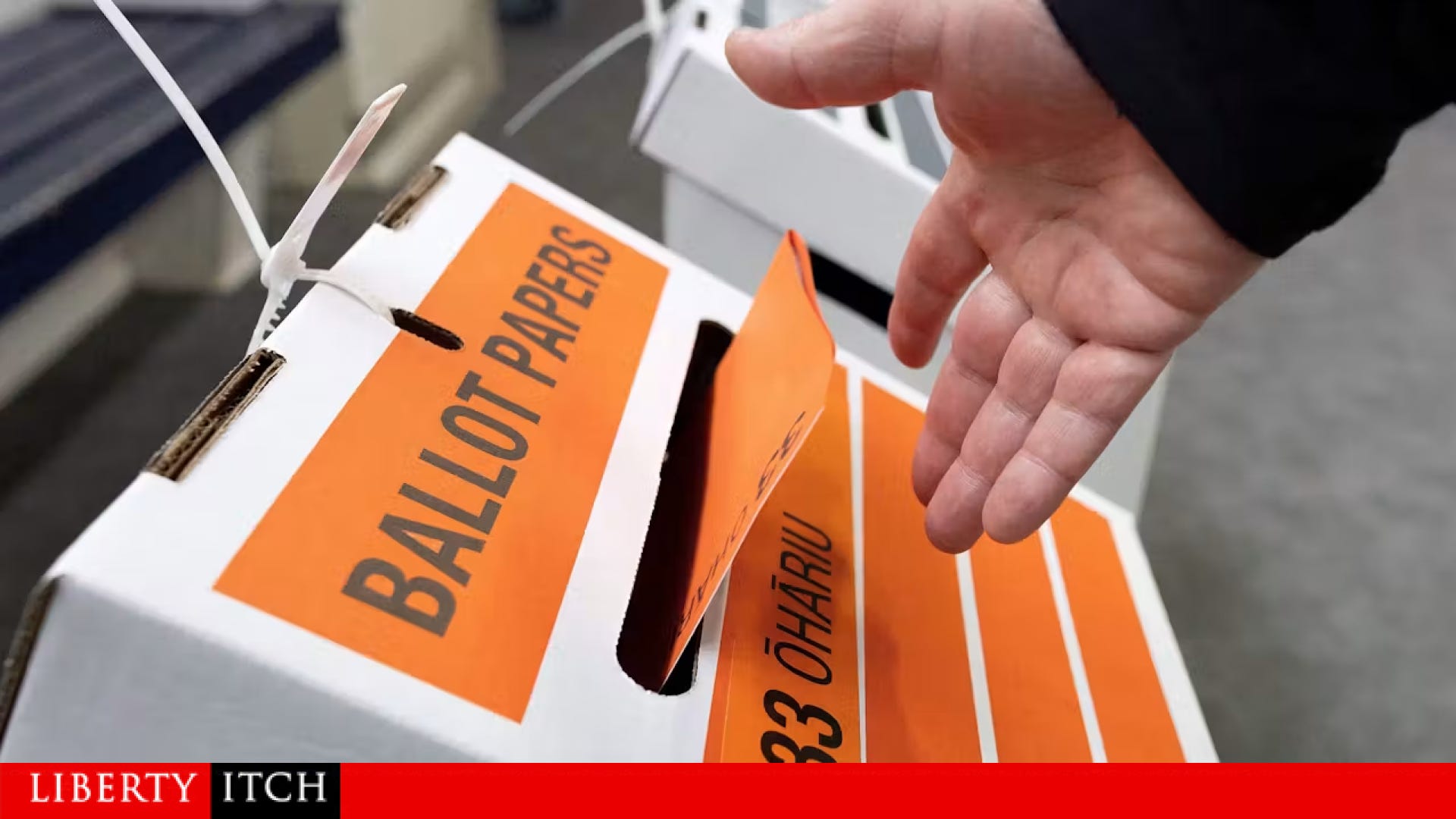
Many will be confused by the fact that they voted in an election not long ago, probably without knowing which one. Plenty of people have no idea that there are parliaments in each state capital as well as Canberra.
They may not vote informally, as that tends to be a deliberate choice. More likely they will enter a donkey vote (ie sequential numbers down the page) or vote for the candidate with the nicest teeth or hair.
In most other countries, such people would typically not bother to vote. On election day they would simply go to work, watch or play sport, go shopping, or do whatever else they normally do on a Saturday. If Australia was like those countries, this might be around 30 percent of voters.
Australia is one of only a handful of countries in which voting is obligatory. There is a cluster in South America including Argentina, Brazil, Ecuador, Peru and Uruguay, a few in Europe (Belgium, Liechtenstein, Luxemburg and Slovakia), plus Nauru, Singapore and North Korea. All the countries with which we like to compare ourselves, including the UK, USA, New Zealand and Canada, have voluntary voting.
Genuine democracy is based on universal suffrage, yet the right to do something implies that you have a choice not to do that thing.
Those who live and breathe politics cannot contemplate how anyone could be disengaged from voting. They tend to view it as an education challenge: if it is all properly explained, everyone will take it seriously. They see a lack of eagerness to vote as simply an information deficit.
No doubt it would be nice if absolutely everyone was genuinely committed to electing the best possible candidates based on a comprehensive understanding of their policies. But reality is not like that.
Elections are often decided by margins of less than five percent, which makes the votes of low information, disengaged people highly influential. It makes sense to ask: what is being achieved by forcing them to vote?
Compulsory voting supporters worry that optional voting will result in a loss of support for their side of politics. Labor supporters tend to worry more than conservatives, despite the fact that left-leaning parties have never had any trouble winning elections in countries where voting is voluntary. New Zealand and Canada are just two examples.
Proponents of compulsory voting also argue that compulsion improves the quality of the democracy. One of their favourites adages is that while you may not be interested in politics, politics is interested in you. You are affected by the results of elections, so you must participate.
The problem is that there is simply no evidence that countries with compulsory voting achieve better democratic outcomes than countries with voluntary voting. No matter the measure – political stability, civil rights, social cohesion, economic performance – the evidence is just not there.
What the evidence shows is that countries with a history of turbulent governments, such as Italy, would be no better off if they had compulsory voting. That includes now, when its government is stable. Some say that governing Italy is absolutely impossible – and totally unnecessary.
Equally, would Australia be better off it had voluntary voting, like Italy? That also includes now, when we’ve had eight Prime Ministers in the last 20 years. We could similarly ask, if all those governing us died in a plane crash, would the whole country come to a grinding halt as they seem to believe?
The only arguments that make rational sense are based on principles.
From a libertarian perspective, voting should of course be voluntary. Libertarians oppose coercion, so invoking the power of the law for merely staying home is unacceptable. Compulsion is also the opposite of free choice, a key libertarian principle. The freedom to choose not to vote at all is equally as relevant as who to vote for.
They won’t care who wins, won’t know who the candidates are, won’t know which parties are running, and won’t vote for anyone based on their policies.
Compulsory voting actually makes the democratic process less responsive to the views of the electorate, as political parties can ignore their primary constituency and instead concentrate solely on swinging or whimsical voters. Under voluntary voting a candidate needs to appeal both to their supporters (who otherwise might decline to vote) and swinging voters (who might vote for other parties).
Under compulsory voting, representatives of safe seats face no democratic pressure. Voluntary voting would mean that no seat was truly safe as supporters may refuse to vote. Representatives need to be constantly aware of the views in their electorate and take no victory for granted.
Genuine democracy is based on universal suffrage, yet the right to do something implies that you have a choice not to do that thing. It would be absurd to say that Australians have the “right” to pay tax; paying tax is a legal obligation, not a right. Making voting compulsory changes it into a legal obligation rather than a right.
The right to vote should be a civil freedom, like free speech or free association. Free speech does not imply a requirement to speak and free association does not imply a requirement to join clubs. Likewise, the freedom to vote should not mean a requirement to vote.

Technically voting is voluntary. You just need to get your name marked off at a polling booth, you aren't otherwise required to submit a ballot. I have done this numerous times because I live in a seat that usually only has three options; Labor, Liberals and Greens.
What I would prefer is a better preferential voting system where you can deliberately exhaust your vote. On the rare occasions where there has been someone worth voting for, it pains me to have to give a second preference vote to someone I absolutely do not want. Marking only one box is an invalid vote.
I have always thought we need a right to abstain from voting - if our politicians are allowed to do it, so should we.