


Is the millennial generation the last cohort of kids free from constantly being watched?
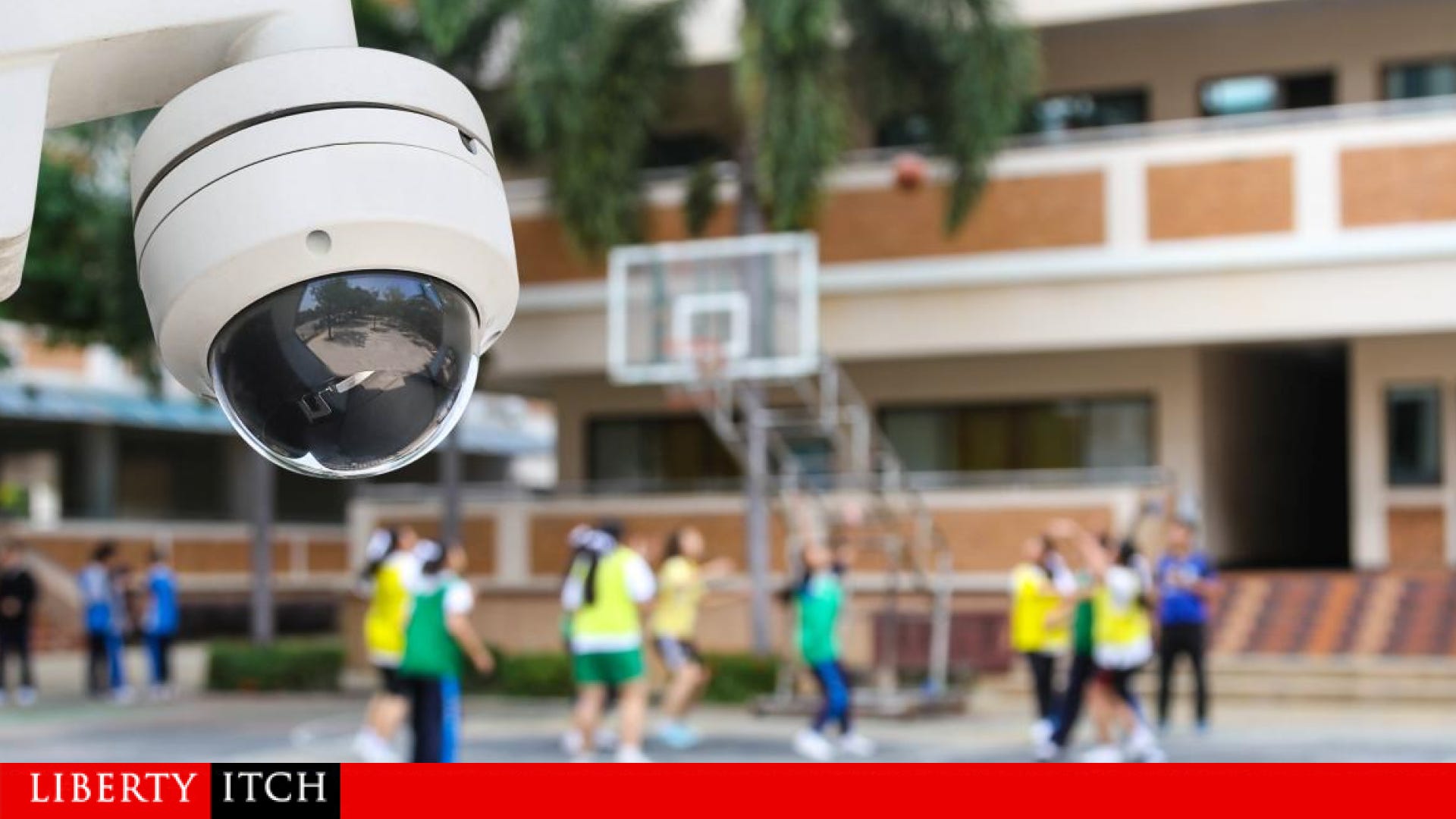
Elder Generation Z (1997-2012) might have escaped round the clock surveillance, but Generation Alpha (2012-2025) has likely had their entire existence recorded, stored, analysed, tabulated and retrieved by governments and institutions without their express consent or knowledge.
According to co-editor of the Surveillance Futures journal, Dr. Emmeline Taylor Ph.D. of the Australian National University says, “A survey of parents in 10 countries revealed that more than 80 per cent of parents with social media profiles had shared images of their children under two years old.”
Dr. Taylor also says some schools in the United Kingdom and United States had their student’s fingerprints biometrically scanned or movements at school and elsewhere tracked with radio-frequency identification devices (RFID), or their precise location tracked via their mobile phones.
If you’re a parent and impose this on your kids, it’s my opinion that you’re creepy, bad, and you should feel bad for doing it. That said; it’s your right as a parent. The same goes for social media – you should be the sole arbiter of determining whether your kid is on social media or not, not some bureaucrat or unelected eKaren. (Imagine our shock when most kids got around it anyway.)
it might also dampen their resolve for entrepreneurship, experimentation with identity, or sexuality.
What should concern every libertarian is that this data could be intercepted or forcibly handed over to government. Not only that, but it also has deleterious effects on freedom and liberty for all.
Just like in Orwell’s Nineteen Eighty-Four, being snooped on 24/7 carries with it chronic psychological effects. NeuroLaunch says they “show up as chronic hypervigilance, decision paralysis, eroded self-esteem, and a documented ‘chilling effect’ where people quietly edit their opinions, choices, and even their private behaviour to match what they imagine an observer would approve of.”
Over a long enough period, kids won’t simply mimic what they need to say to be on the right side of cancellation – they’ll start believing it.
A child or adolescent’s constant hypervigilance opens the door to learned helplessness – that they’re so afraid of making mistakes, they won’t even try.
Amanda Lambros, psychologist, mental health educator, and world’s first Master of forensic sexology says that kids making age-appropriate mistakes is part of a child’s preparation for adulthood.
“When I was young, I got to make age-appropriate mistakes and learn from those mistakes that I know all my friends were doing as well,” she says. “Whereas now it’s like if you’re so hyper-surveilled, your parents look at an app and stop it before it begins. They’re like, ‘Well, why aren’t you here? How come you’re there? I’m going to come and get you.’
“It’s not really giving them the opportunity to learn any lessons, even if they are stupid things like having one too many beers.”
Kids may think twice about passing a dutchie to the left-hand side in fear of parents, institutions, or government finding out; and it might also dampen their resolve for entrepreneurship, experimentation with identity, or sexuality. We already know Gen Z have less sex than the last generation and don’t drink as much, perhaps too afraid to blunder into potential messes that hardened our resolve.
Another quirk is that they are now so cavalier in giving over their information to big corporations and government, its conditioned them into a “new normal.”
“It’s creating a population of people to think of handing over their data as a blasé, ‘Okay, yeah, that’s cool.’,” Amanda says. “Yet another organisation needs our details. Here it is, fine. ‘I need to give the bank my details or else I can’t access my account, and I need to give Centrelink my details otherwise I can’t get my $100 fuel voucher.’ They just go with the flow and do it.”
What should concern every libertarian is that this data could be intercepted or forcibly handed over to government.
If I’m under watch and I know all my friends are, there tends to be a homogenisation of behaviour. This process of behavioural contagion means kids are observing the actions of their peers and adopt similar or identical behaviours. If Tall Poppy syndrome already discouraged Australians to aspire to better things, surveillance could murder ambition while it’s still in the cradle.
Lambros also says that over-regimentation and a parent’s drive for kids to be high achievers can lead to premature burnout, especially when every single minute out of every single day is filled with activity – that’s constantly accounted for.
“I think if kids feel too overwhelmed by the demands of everyday life without getting a break or having that opportunity to go, ‘No, you don’t really need to achieve this,’ then I think we are setting them up for poor mental health outcomes.
“When are kids allowed to actually be kids? Why can’t we say, ‘Just go out and kick a footy and I don’t care where you are as long as you’re home before the lights go on.’ It doesn’t happen anymore.”

"...surveillance could murder ambition while it’s still in the cradle."
You are right.
My son is SO aware of cameras EVERYWHERE that he points them all out. He asks, mum why are cameras everywhere? He is afraid of these faceless things that look at him constantly. He is afraid of the invisible "baddies" that must be around so much to warrantt the cameras. He panicss in the car because if I touch a phone, I will be arrested because the camera will see. He worries that the cameras will see Every Tiny Wrongdoing and that the Police will Take Us Away.
It is absolutely criminal.
If i was able to live on a remote homestead, I would do it in a heartbeat.