


The right to protect oneself from harm is among the most basic and universal of human rights. It predates governments, laws, and social systems, and is rooted in the simple truth that each human life has inherent value and that individuals must be able to preserve their own safety when confronted with violence.
The Romans recognised this. Cicero declared:
“Civilized people are taught by logic, barbarians by necessity, communities by tradition; and lesson is inculcated even in wild beasts by nature itself. They learn that they have to defend their own bodies and persons and lives from violence of any and every kind by all the means within their power.”
In Australia, this natural right is acknowledged in principle but denied in practice. We are, in far too many ways, a nation of defenceless victims.
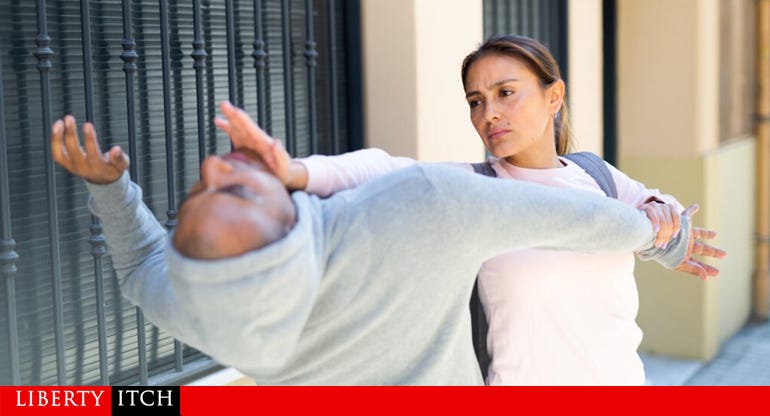
Australian law recognises the right of self-defence. Courts accept that an individual may use reasonable force to protect themselves from an imminent threat. But in daily life, Australians are prohibited from possessing the very tools that would make such a right workable. That includes non-lethal defensive items—pepper spray, mace, and personal tasers. It is even a criminal offence to wear a bulletproof vest. The result is a paradox: citizens are told they may defend themselves, but are forbidden the practical means to do so.
Recognising the right to self-defence means more than acknowledging it in legal textbooks
This restriction sets Australia apart from most of the developed world. In the vast majority of countries in Europe, Asia and the Americas, access to non-lethal personal protection tools is common and uncontroversial. These items are not designed for vigilantism or aggression; they exist precisely because they reduce the likelihood of fatal confrontations. They provide vulnerable people—women, the elderly, individuals with disabilities—a fighting chance in the precious seconds between the onset of an attack and the arrival of help.
Relying solely on the police for protection is unrealistic, and in many cases dangerous. The police do critical work, but they cannot be everywhere at once. The saying is as old as it is true: when seconds count, the police are minutes away. In large areas of Australia, those minutes can stretch into hours. To suggest that citizens need no personal means of protection because police patrols exist is a fiction that crumbles under the slightest scrutiny.
The debate over self-defence does not involve reliance on guns, as some like to suggest. Many Australians are uncomfortable with firearms for personal defence, and that sentiment is unlikely to change any time soon. But non-lethal tools are a different matter entirely. They offer protection without escalation, safety without lethality. It is difficult to believe that Australians ever consciously agreed to being stripped of these basic, practical means of defence.
Critics often claim that such tools can be turned against their users, but data and experience from countries where they are legal paint a different picture. In the vast majority of cases, non-lethal defensive tools empower victims rather than emboldening attackers.
Some argue that allowing self-defence tools sends the wrong message, or that advocating for their use is a concession to male violence. But refusing to provide individuals—especially women—with practical means of protection because “men shouldn’t be violent anyway” confuses aspiration with reality. It is making the perfect the enemy of the good. Yes, we must aspire to reduce violence (by women as well as men), but until that is achieved, vulnerable people should not be left defenceless in the hope that society will someday improve.
Individual may use reasonable force to protect themselves from an imminent threat.
A government that denies its citizens the means to protect themselves infantilises them. It assumes that ordinary people cannot be trusted with responsibility and that the state must act as guardian in their place. That mindset is not protective—it is paternalistic. Worse, it leaves the most vulnerable with the fewest options at the moments when options matter most.
Recognising the right to self-defence means more than acknowledging it in legal textbooks. It means empowering individuals with the tools, knowledge and autonomy to safeguard their own lives. Anything less is not protection—it is abandonment.
In a perfect world, no one would need to prepare for the possibility of assault, rape, or murder. In a perfect world, telling people to “stay vigilant” would be enough. But we do not live in that world, and pretending otherwise is not compassion—it is negligence. As long as violence exists, people must be able to take reasonable, lawful steps to protect themselves from it.

It's come to this point, where the first time in my life (at retirement age) I have had to consider self defence. Making the non lethal means illegal in AU tells me everything about our (sic) leaders. It's deliberate, not just an oversight.