


The legalisation of same-sex marriage in Australia in 2017 was widely celebrated as a landmark moment in the nation’s social and political development. More than 60 percent of Australians voted in favour of allowing consenting adults, regardless of sex, to marry. Parliament subsequently amended the Marriage Act, and what followed was a swift integration of same-sex unions into everyday Australian life.
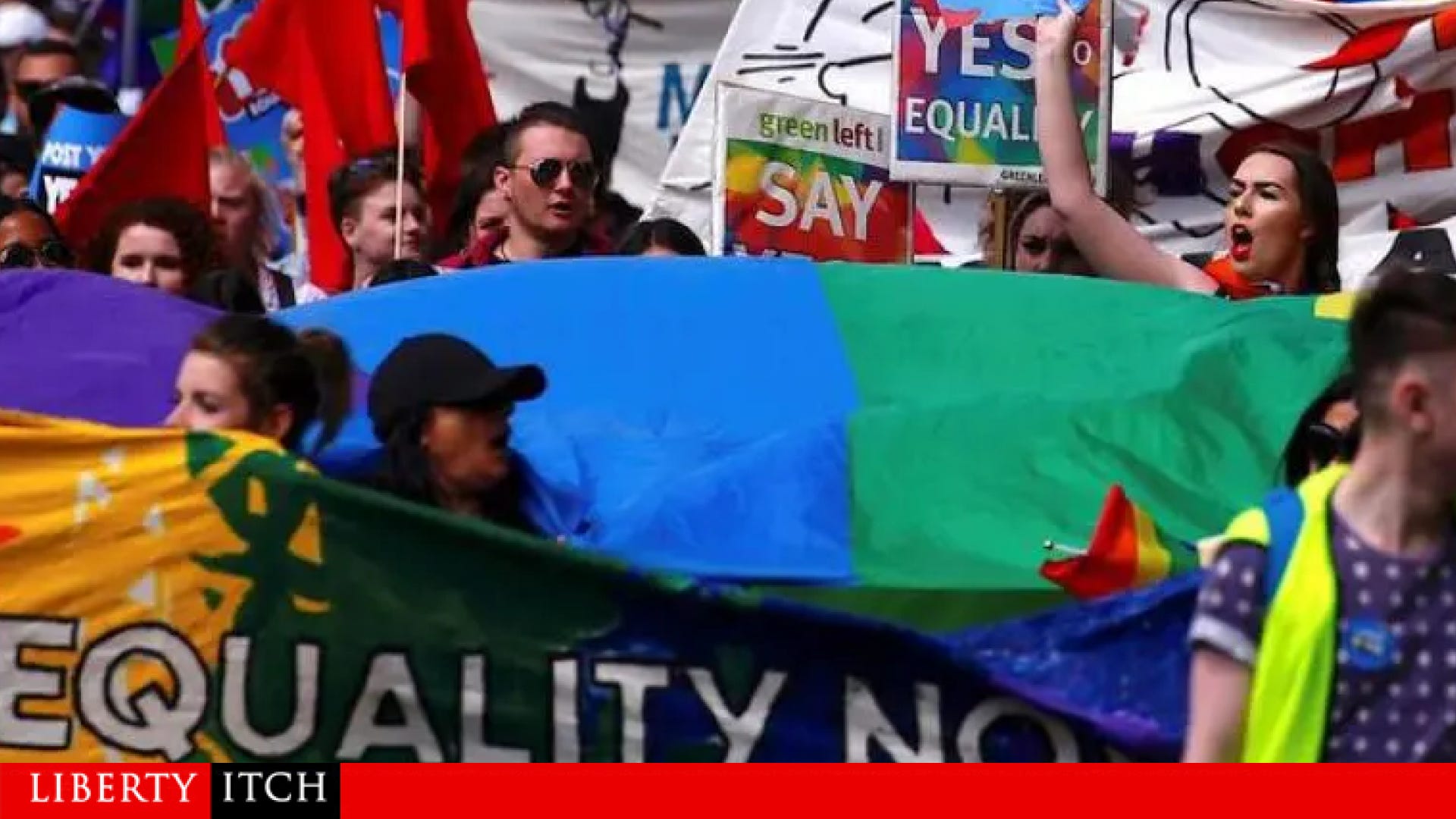
At the time, the reform was framed as a simple matter of fairness and individual liberty: the government should not restrict who adults can love or marry. It was, at its core, a libertarian correction to an outdated legal constraint. However, in the years since, the consequences of that decision have extended beyond the narrow question voters were asked, raising legitimate concerns about cultural, social, and institutional shifts that many Australians neither anticipated nor explicitly endorsed.
One of the most significant developments has been the evolving meaning of marriage itself. Even before 2017, marriage as an institution had been undergoing gradual change due to economic pressures, shifting gender roles, and declining religious adherence. Yet the legalisation of same-sex marriage appears to have accelerated a broader redefinition. Marriage is increasingly seen not as a foundational social institution tied to family formation and long-term commitment, but as an optional or symbolic gesture.
Among younger generations, particularly heterosexual couples, there is a growing tendency to treat marriage as unnecessary or even outdated. The tongue-in-cheek notion that “marriage is now only for gays” reflects a deeper cultural ambivalence. While the reform aimed to expand access to marriage, it may have inadvertently contributed to its diminishing significance.
Even disputes within the lesbian community itself, highlight the difficulty of reconciling competing definitions of identity and rights
Beyond the institution of marriage itself, there has been a marked shift in how sexuality is expressed in public life. Historically, most Australians—regardless of sexual orientation—treated sexuality as a private matter. The legal and social risks once faced by homosexual individuals understandably led to discretion. Today, however, there is a far more visible and, at times, overt celebration of sexual identity by homosexuals. Events such as Sydney’s Mardi Gras, gay pride festivals, the proliferation and influence of advocacy groups, and the widespread display of symbolic imagery have become prominent features of public culture. While supporters view this as a desirable affirmation of identity and equality, others question its purpose and scale. A key concern is whether such expressions, particularly when supported by public funding, align with what Australians believed they were endorsing in the 2017 vote. The issue is not the existence of diverse identities, but the expectation that they be publicly celebrated and institutionally endorsed.
Perhaps the most contentious developments have emerged in relation to gender identity. The increasing prominence of transgender issues in public discourse has introduced complex and often polarising questions about biology, identity, and rights. Central to the debate is the claim that individuals can be “born in the wrong body,” a concept that has gained significant traction in certain leftwing circles. While many Australians are willing to accept and respect individuals who identify differently from their biological sex, tensions arise when these identities intersect with spaces and rights traditionally reserved for others.
For instance, the inclusion of biological males who identify as female in women’s spaces—such as bathrooms, changing rooms, and prisons—has generated widespread concern. The issue is not merely theoretical: there have been instances where such policies have had consequences ranging from acute discomfort up to sexual assault. Similarly, in competitive sport, the participation of transgender women has raised serious questions about fairness. Biological differences in strength, endurance, and physiology mean that female athletes can be placed at a distinct disadvantage. For many, this challenges the integrity of women’s sport and represents a clear conflict between inclusion and fairness.
Even more troubling for some is the growing debate about children and gender identity. The question of whether minors can consent to medical interventions—such as puberty blockers, hormone treatments, or surgery—has become highly controversial. Critics argue that these are life-altering decisions that young people are not equipped to make, particularly given the evolving nature of identity during adolescence. Concerns have also been raised about the roles of parents, educators, and medical professionals in guiding or influencing these decisions. Some medical practitioners are even prohibited from expressing dissenting views, indicating it has become a matter of ideology rather than science.
Legal battles have begun to reflect these tensions. Cases involving women-only spaces and organisations, even disputes within the lesbian community itself, highlight the difficulty of reconciling competing definitions of identity and rights. Situations in which biological males identifying as women seek inclusion in female-exclusive groups have led to accusations of discrimination on all sides. These conflicts underscore a broader challenge: how to balance respect for individual identity with the protection of established rights and boundaries.
Australians are willing to accept and respect individuals who identify differently from their biological sex.
It is true that same-sex marriage did not directly cause these developments; many were already emerging and likely would have gained prominence regardless of the 2017 reform. However, it is equally difficult to ignore the perception that the legalisation of same-sex marriage acted as a catalyst or symbolic endorsement for a wider set of social changes. What was presented as a narrowly defined expansion of marriage rights has, in practice, been interpreted by some as a mandate for broader cultural transformation.
Ultimately, the core principle that drove support for same-sex marriage—limiting government interference in private relationships—remains widely accepted. Yet the subsequent developments raise a critical question: where should the line be drawn between individual freedom and the rights of others? Many Australians were willing to support equality in marriage because it did not appear to impose on their own lives or values. The current debates suggest that this balance is becoming harder to maintain.
The challenge is not to revisit the decision of 2017, but to confront its broader implications. Social progress does not occur in isolation, and reforms often carry consequences beyond their original intent. Recognising and addressing these consequences is essential to ensuring that the principles of freedom and mutual respect are preserved for all.

As a libertarian, I didn't support same-sex marriage. My reasoning is that the only reason that the state has in marriage is that it has an interest in the future generation - children. That isn't possible in a same-sex marriage. Therefore, if the state is no longer going to have an interest in children, then I'd prefer it got out of marriage entirely. The idea that the government gets to control who I chose to have relationships was already outrageous.
Sall Grover and many others are fighting for women. It blows my tiny mind that we’re pandering to nutjobs who think they are entitled to be called women