


Recently, the Australian government and various states governments have passed laws that restrict the public display of symbols associated with Nazism and other extremist groups.
In this three-part series, I will discuss the problems with criminalising symbols, gestures and slogans and how it negatively impacts freedom of expression, creating absurd and unjust situations affecting ordinary people.
When a symbol is banned, it does not eliminate the desire to express an idea. The typical outcome is that a new symbol is adopted to express the same idea and, if authorities clamp down on the new symbol, yet another new symbol is adopted. This creates an endless game of whack a mole in which a lot of symbols become illegal and normal people find themselves in legal trouble for displaying an ever-growing list of symbols that are prohibited and branded as things they are not.
Sometimes, political groups and movements will resort to using symbols or imagery that are impractical to ban. For example, Pro Palestinian groups started using watermelon imagery in response to censorship of the Palestinian flag because to ban the depiction of a common fruit would make government authorities look stupid given the person can plausibly deny its meaning and claim they just like watermelon.
The Rising Sun flag and the US Confederate flag are also controversial with different groups
Another example is the adoption of all black clothing and specific haircuts amongst neo-Nazis in jurisdictions that prohibit Nazi symbols. For the government to ban people from wearing all black and to dictate hairstyles would constitute huge government overreach, impacting many people who aren’t neo-Nazis.
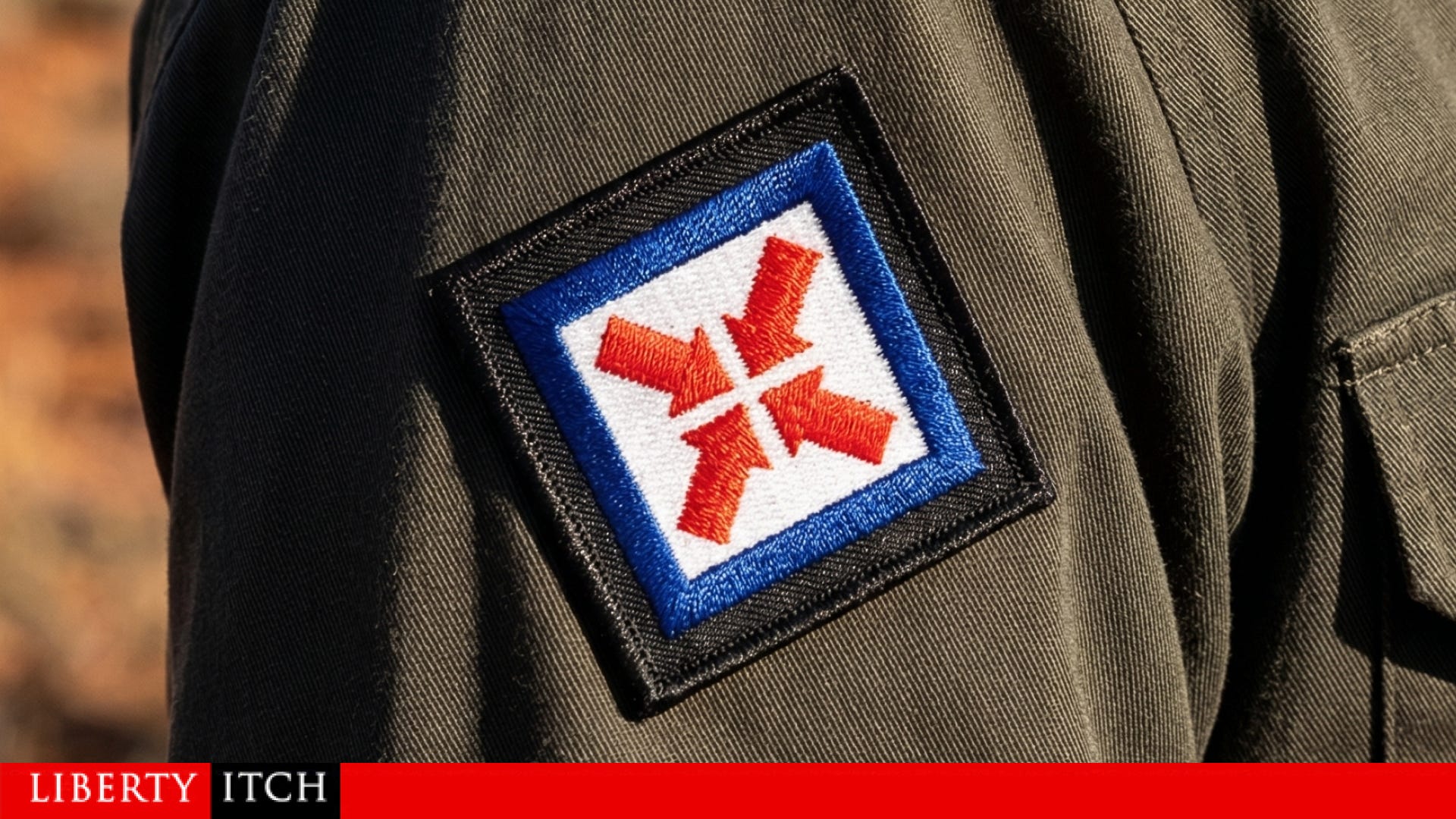
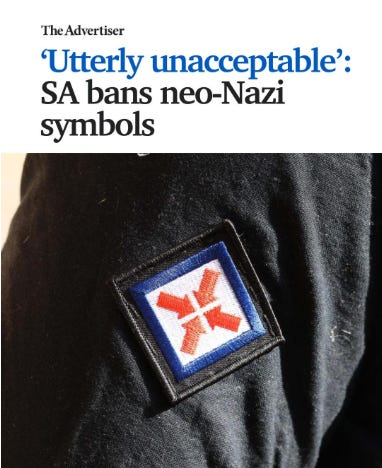
The risk of harm to ordinary people becomes especially high when official lists of current prohibited symbols are not easily accessible online. For example, the image below contains a recently banned symbol in South Australia which is meant to be associated with a neo-Nazi group. The only reason I know this is banned is because I read about it in a news article.
Given this, I could easily see a normal person buying a piece of clothing from an Op shop or just finding a piece of media depicting this symbol and reposting it or drawing it without any awareness that they are displaying a prohibited symbol.
And who decides what symbols to ban? If the government can ban the swastika, then what is to stop them from banning other symbols such as the Gadsden flag or depictions of Pepe the Frog, which is used in a range of political and non-political contexts in online communities?
Just like with any law that intends to limit political expression, it creates a slippery slope that will inevitably be exploited by authorities. I believe it is preferable to live in a society that tolerates the swastika rather than a society where the government can simply ban symbols associated with unpopular (or even popular) political movements.
Another problem is that symbols can have different meanings to different people. While the swastika, for example, is almost universally considered a hate symbol in the West it is actually an ancient symbol originating up to 10,000 years ago, representing good fortune, the sun, or life. Derived from the Sanskrit svastika (well-being), it was used for millennia by Hindus, Buddhists, Jains, and Native Americans before being adopted by the Nazis in the 20th century.
Other symbols such as the Rising Sun flag and the US Confederate flag are also controversial with different groups holding widely different stances.
There is little to no consideration given to the range of contexts of which even a usually hateful symbol can be used in a manner that is not intended to promote hate. Although there are meant to be narrow exceptions such as allowing recognised religions such as Buddhism to use the swastika in the practice of their religion, allowing the symbol to be displayed for academic and artistic purposes, for a news report with ‘fair and accurate’ reporting, or in a manner that is meant to be in opposition to Nazism, fascism, etc, the reality is that these are merely legal defences.
People find themselves in legal trouble for displaying an ever-growing list of symbols
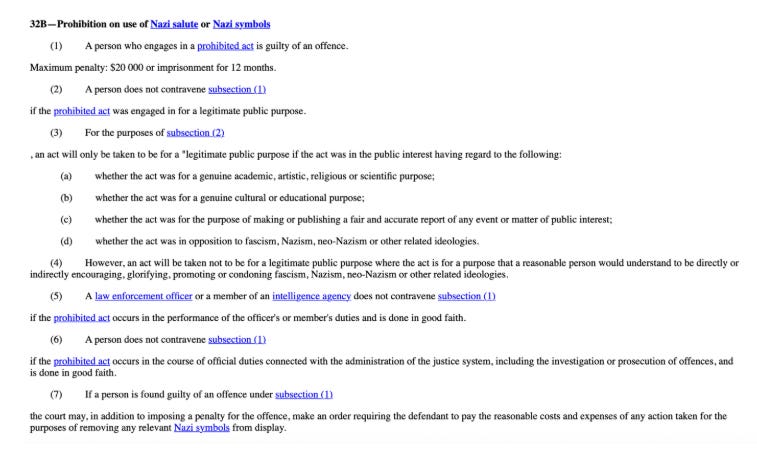
(Legislation for South Australia)
This means that even if you are using the symbol in a manner that is meant to be lawfully permissible, you can still be arrested, and you will be made to suffer the financial, psychological, and social strain of going through the legal system with the recognition of ‘legal exceptions’ being based on the current political climate. This creates a chilling effect on legitimate expression.
In my next part of this series, I will discuss some examples in which such legislation restricts legitimate expression.

Great article Jesse. Well thought out, written and explained, as usual