


Milton Friedman famously said, “You cannot simultaneously have free immigration and a welfare state.”
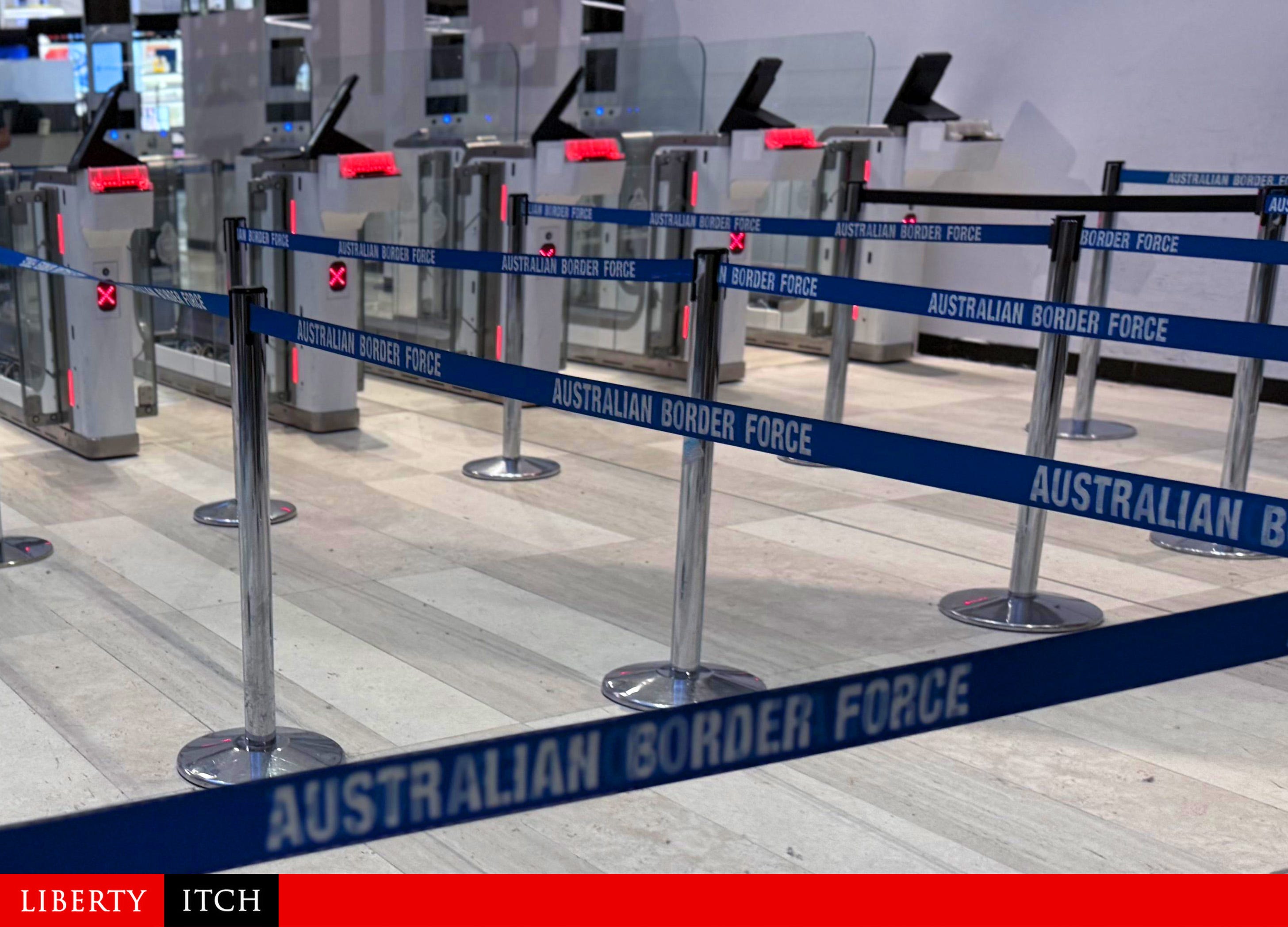
What he meant by this is that a country can be generous with taxpayer-funded benefits, or it can be relaxed about who enters and remains. But it can’t do both indefinitely without bankrupting itself, or breeding resentment and inviting electoral backlash.
Based on recent polling, the two major political parties in Australia are learning that lesson the hard way.
For years, Australians were told that high immigration was an unqualified good. More people meant more growth, more workers, more students, more customers, more demand, and more multicultural street food festivals. Presumably, it also meant more Treasury officials congratulating themselves on GDP figures that looked better than anyone’s lived experience.
Australians don’t live in Treasury spreadsheets. They live in suburbs where rents are unaffordable, roads are clogged, hospitals are stretched, schools are crowded, wages are stagnant, and young people cannot get a foot in the door of the industry they trained for.
That is why the immigration debate has shifted so rapidly. Australians are, by and large, fair-minded people. We know that migrants have helped build this country. The problem is not migration in the abstract, but that Australia’s political class has treated population growth as a cost-free solution to Australia’s economic and demographic issues.
It seems obvious, but too few politicians and bureaucrats are prepared to say it aloud: if you want full access to the Australian social safety net, become an Australian and contribute.
High levels of migration have not been cost-free. Young and working age Australians understand this better than most. They’ve been told to study hard, work hard, save and be patient, while each year they’re asked to compete with hundreds of thousands of additional people for housing, jobs and public services. It is a spectacular way to energise several generations of voters to vent their frustration at the ballot box.
The issue of access to welfare makes the problem even sharper. Many Australians probably assume that non-citizens cannot receive welfare. That assumption is wrong. Permanent residents can access a range of taxpayer-funded benefits, subject to waiting periods and eligibility rules. The current debate was sharpened by Angus Taylor’s proposal that a future Liberal government would restrict a litany of welfare payments and services to Australian citizens, including JobSeeker, pensions, parenting payments, carer payments and the NDIS.
The usual suspects immediately reached for the smelling salts. Apparently, drawing a line between citizens and non-citizens is now “divisive”, “mean” and “far-right”. How exhausting.
If citizenship does not mark the boundary of full political membership and access to taxpayer-funded benefits, what does it mark?
A migrant who comes to Australia to work, start a business, fill a genuine skills shortage, pay their own way and eventually becomes a citizen should be welcomed. That is a story of contribution. It is the kind of immigration Australians have historically supported.
But a migrant who comes here without work, without the means to support themselves, or with an expectation that Australian taxpayers will underwrite their life before they have made the commitment of citizenship, is a different proposition.
Libertarians should be especially clear-eyed about this. In a freer world, with a much smaller welfare state, lower taxes and less government intervention, immigration could be far more open. If people came here to work, trade, build, invest, and rely on themselves, their families, their employers, charities and civil society, the argument for restricting movement would be much weaker. But that’s not the country Australia has chosen to be.
Australia has built a vast welfare state. We tax heavily, regulate heavily, and redistribute heavily. We have been taught to look to Canberra for income support, housing subsidies, childcare payments, disability support, aged care, health care, energy bill relief, disaster payments and cost-of-living handouts. The state has placed itself at the centre of almost every major financial decision in life.
Once the government has promised to provide cradle-to-grave security, immigration can no longer be treated as a purely private matter. The taxpayer is dragged into the equation. The private decision of one person to move countries becomes, in part, a public fiscal commitment imposed on everyone else.
That is the problem Friedman rightly identified.
If citizenship does not mark the boundary of full political membership and access to taxpayer-funded benefits, what does it mark?
Open borders and private charity can coexist. High immigration and individual responsibility can coexist. A generous welfare state and strict citizenship prerequisites can probably coexist. But high immigration, weak citizenship thresholds and a giant taxpayer-funded welfare state cannot coexist for long without serious consequences, including a breakdown in the social contract.
The major parties have avoided this truth because they both benefit from the illusion. Labor likes the welfare state. Big business likes high migration. Universities like foreign students. Treasury likes headline GDP growth. State governments like stamp duty from rising property prices. The Liberal Party, when in office, lacks the spine to challenge any of it. The result is the uniparty’s favourite policy cocktail: more people, more spending, more pressure, more bureaucracy and, of course, more tax revenue.
Nobody should be surprised by One Nation’s surge in popularity.
It seems obvious, but too few politicians and bureaucrats are prepared to say it aloud: if you want full access to the Australian social safety net, become an Australian and contribute.
That shouldn’t be controversial. It’s a great honour that so many people choose to come to Australia. What it says is that they think what we’ve got is great, and they would like the same opportunities for themselves and their family.
It’s even more of an honour when those migrants choose to become an Australian citizen. It says: this is my country, these are my people, these are my obligations, and these are my rights.
A liberty-first approach would reduce the welfare state, reduce taxes, restore individual responsibility, and then allow greater freedom of movement. But until that happens, we should stop pretending that Australia can run a huge welfare system while importing enormous demand for it.
A country that welcomes contributors is confident. A country that imports welfare dependency is reckless. Friedman was right; Australia can have a big welfare state, or it can have high immigration levels, but it cannot have both.

Australians, when polled, have been for reducing immigration since the 90s. Mass immigration started being a thing in the last year of the Keating government, and has increased every year since (with the exception of the WuFlu panic). As a libertarian minded person, the other factor I consider is that most of the migrants we bring in are from much more statist cultures making our job harder.
As a retired migration practitioner, I found this article refreshing because it confronts a reality that Australia's political class has spent years avoiding.
Migration policy cannot be separated from welfare policy, housing policy, infrastructure policy, and ultimately citizenship itself. Whether one agrees entirely with Milton Friedman or not, he identified a tension that remains unresolved today: a large welfare state and very high migration levels inevitably interact.
The article is particularly strong on the distinction between contribution and entitlement. Australians have historically been remarkably welcoming of newcomers who come here to work, build businesses, raise families, and become citizens. What is causing public concern today is not migration itself, but the scale and pace of population growth at a time when housing affordability, infrastructure capacity, and public finances are under obvious strain.
One point often overlooked is the humanitarian program. Australia has now granted well over one million refugee and humanitarian visas since the end of the Second World War. That is an extraordinary record of generosity by any international standard and something Australians can be proud of. But generosity does not eliminate limits. A nation facing housing shortages, stretched services, and significant public debt has a legitimate right to ask whether previous levels of humanitarian intake remain sustainable.
The article is also correct to challenge the assumption that migration is a cost-free economic policy. Governments have become accustomed to using population growth to support headline GDP figures while paying insufficient attention to per-capita outcomes, housing supply, and living standards. As practitioners, we see visa decisions made one application at a time, while communities experience the cumulative consequences.
Perhaps the most important point is that citizenship should mean something. If citizenship marks membership of the Australian political community, then it is entirely reasonable to expect a period of contribution, self-reliance, and commitment before access to the full range of taxpayer-funded benefits.
Reasonable people will disagree on where the line should be drawn. But what is becoming increasingly difficult to deny is that migration levels, welfare settings, housing affordability, infrastructure capacity, and social cohesion are all connected. Australians are not asking for less compassion. They are asking for more realism.
The public mood has shifted because the facts on the ground have shifted. Politicians ignore that reality at their peril.