


From the Ten Commandments to Enlightenment philosophy, private property has always stood between the individual and the state.
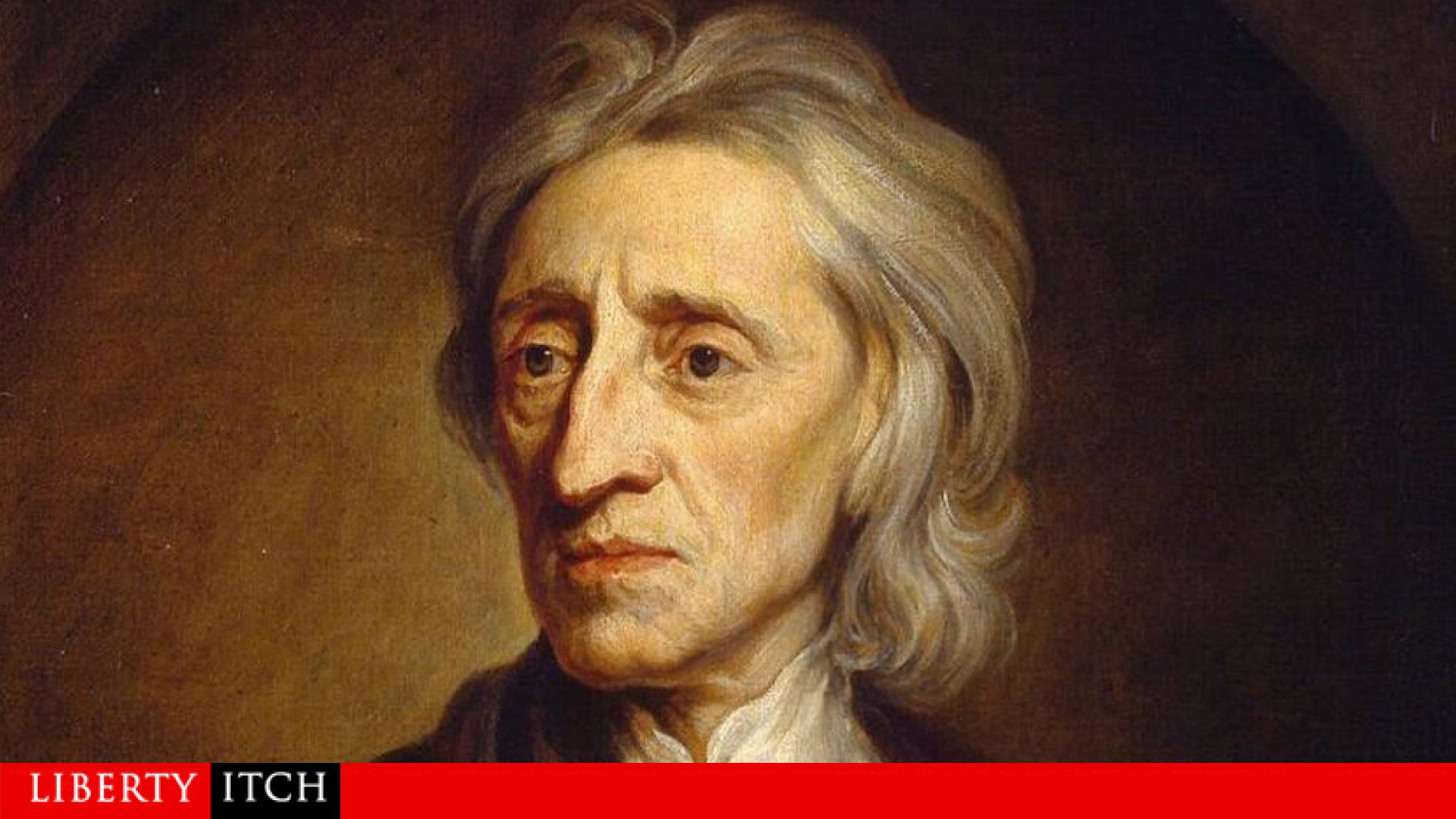
St Thomas Aquinas, one of the Christian Church’s most revered theologians, advocated in his most famous work, Summa Theologiae, the practical utility of private property rights.
Aquinas espoused property rights because he observed three fundamental truths about human nature. First, people take far better care of things they own personally than things held in common, which are often neglected.
Second, human affairs are conducted in a much more orderly fashion when each person is responsible for looking after a specific thing, rather than everyone trying to manage everything at once.
Third, a more peaceful state is ensured when everyone is content with their own share, reducing the constant friction and quarrels that arise over shared ownership.
For a theologian to champion property rights is not as surprising as it may first seem.
The Magna Carta expressly rejected ‘might is right’ and ‘the tyranny of the majority’,
Consider the 10 Commandments.
According to Thomson Reuters’ Legal Encyclopedia, Australian governments have enacted over 40,000 laws since Federation. God, however, managed to distil everything down to 10. To then apply two of them to the protection of people’s property—do not steal (Commandment No. 7) and do not covet your neighbour’s goods (Commandment No. 10)—suggests this is a foundational moral issue.
As Commandment No. 10 indicates, ‘covet’—the old-fashioned word for ‘envy’, or wanting what someone else has—is a sin. This is not to be confused with ‘jealousy’—not wanting someone else to take what you have—which is a natural instinct to protect what is yours. Envy and jealousy are not the same; in fact, they are the exact opposite of each other.
Laws that say ‘do not steal’ clearly imply there are things which belong to other people that you are not permitted to take. It is their property, and they have a right to keep it. This principle clearly pre-dates modern governments. Indeed, property rights were one of the key features of the Magna Carta (1215), a cornerstone document in the history of human rights.
“The right to own and use your property is the guardian of every other right. Without it, your freedom to exercise every other right is limited.” – Pacific Legal Foundation.
Over the centuries, subsequent to both the 10 Commandments and the Magna Carta, two schools of thought evolved regarding the basis of power in society: ‘people first, government second’, and ‘government first, people second’. In other words, did people possess intrinsic rights first—freedom of speech, freedom of assembly, freedom of movement, and the freedom to enjoy their property—and then establish governments to protect those rights? Or does the state come first, creating those freedoms and holding the power to grant or withdraw them at will?
It’s an important question, particularly in a democracy like ours where we say the ‘majority rules’. But does the majority have the right to do whatever it wants to a minority or to an individual? Can the ‘majority rules’ principle be used to create a society of first- and second-class citizens who can be denied their freedom of speech, movement, and property?
“In past times, using majority power, majorities could, and did, confiscate property and lock people up.” – Dinesh D’Souza.
The Magna Carta expressly rejected ‘might is right’ and ‘the tyranny of the majority’, entrenching individual rights into English law.
Laws that say ‘do not steal’ clearly imply there are things which belong to other people that you are not permitted to take.
“The poorest man may in his cottage bid defiance to all the force of the Crown. His cottage may be frail; its roof may shake; the wind may blow through it; the storms may enter, the rain may enter—but the King of England cannot enter. All his forces dare not cross the threshold of the ruined tenement.” – William Pitt, British House of Commons, 1763.
Phrases like ‘the greatest good for the greatest number’ might sound appealing—until they result in overbearing constraints on minorities and individuals, or in arbitrary arrest and seizure. No free society can survive for long under such conditions, even if a temporary majority agrees.
Even if one sets theology and ancient charters aside, the secular case for property rights is equally compelling. Economically, secure property rights are the bedrock of prosperity. Without the assurance that they can keep the fruits of their labour, individuals have little incentive to work, innovate, invest, or build businesses; as the old adage goes, nobody washes a rental car.
Philosophically, Enlightenment thinkers like John Locke argued that because we own our own bodies and labour, mixing that labour with the natural world gives us a natural, secular right to the resulting property. Furthermore, private property acts as a vital buffer against state tyranny. When citizens own their own homes, land, and capital, they possess genuine independence—allowing them to speak freely, dissent, and flourish without relying on the goodwill of those in power.
