In the 19th century, the industrial revolution shifted the world’s focus from farming to factories.
The 20th century ushered in the technology revolution. Electricity, assembly lines and cheap steel transformed how we built things and made things.
By the 21st century we entered the information age. Mechanical and analogue tools gave way to digital microchips, the Internet, and a world run on laptops, smartphones and social media.
The fourth revolution is now with us – Artificial Intelligence.
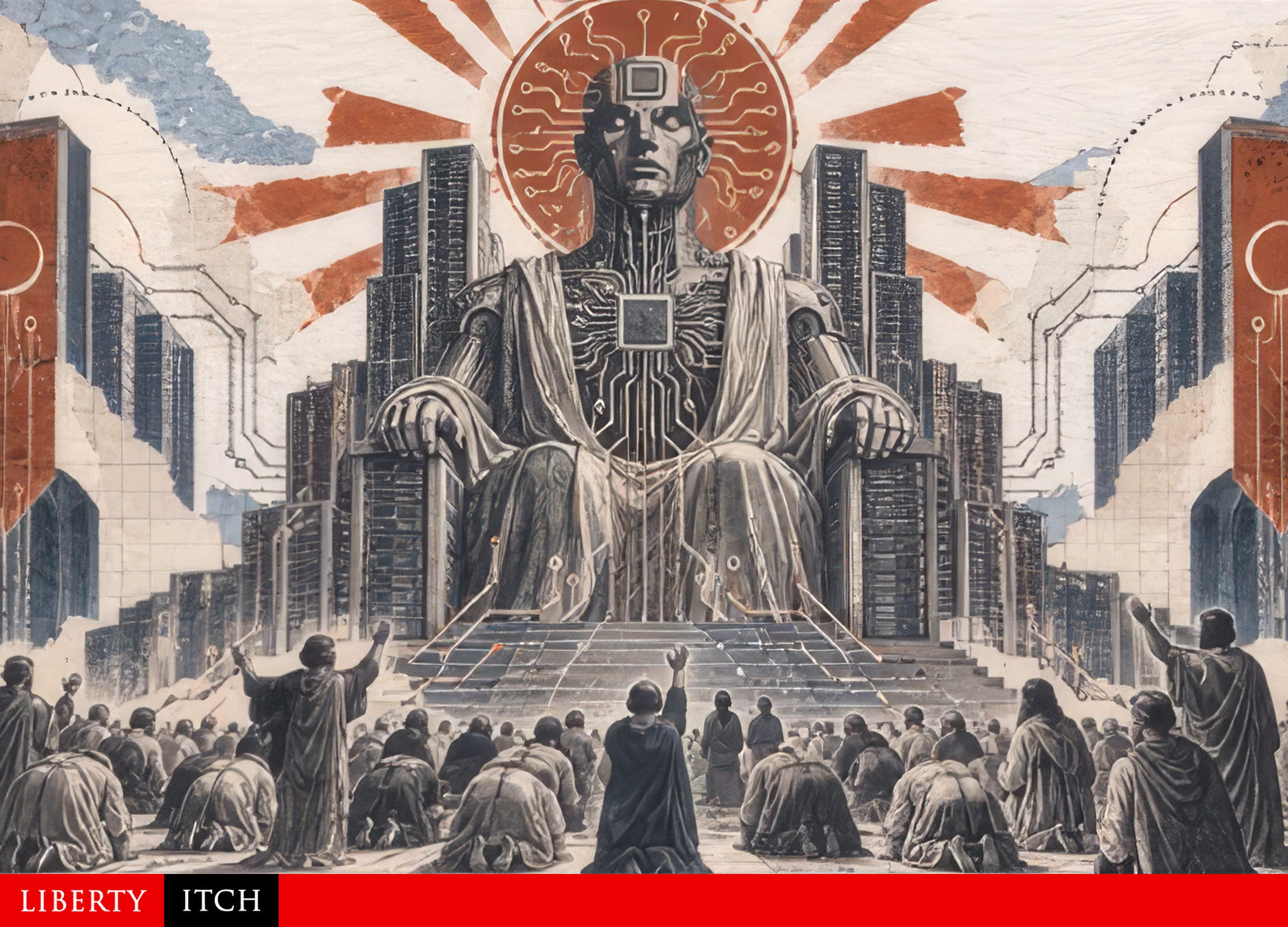
As anyone knows who has engaged with AI, it’s as though you’re communicating with a highly intelligent being.
Israeli historian Yuval Harari puts it this way: “AI has often been compared to previous technological breakthroughs like the printing press and the atomic bomb. But AI is completely different. Printing presses could not decide what book to print. Atom bombs could not decide which cities to destroy. An atomic bomb cannot invent a new and even more powerful weapon. But AI can. We are bringing into our ecosystem a very powerful and alien type of intelligence that we don’t yet know how to control.”
The CEO of AI leader Anthropic, Dario Amodei, responded with, “We must slow the pace at which we improve the capabilities of AI. Left unchecked, it could outrun our ability to understand and control these systems.”
Elon Musk has said, “With artificial intelligence, we are summoning the demon.”
American technology ethicist Tristan Harris responds: “That’s a warning from someone who is inside the room, and what this demon is already doing on its own without being asked.
“For every one dollar spent on making AI safe, 2,000 dollars is being spent on making it more powerful.”
Former Google engineer Anthony Levandowski said, “What is going to be created will effectively be a god. Not a god in the sense that it will make lightning or cause hurricanes, but if there is something a billion times smarter than the smartest human, what else can you call it?”
British bioethicist and theologian John Lennox says we are building an entity that is created by human beings but will transcend them. “Is this playing God?”, he asks. “Is this another tower of Babel?
“We are sleepwalking into a future where we are gradually ceding control and information and data all the time which could be used by bad actors against us”, says Lennox.
The original Peter Principle, written by the Apostle Peter, states, “Therefore, seeing that these things are going to happen, what manner of persons ought we to be?”
Often, a good starting point in answering that question, is what we should not be doing! Or who we should not turn to.
Unequivocally, the answer to that question is politicians and public sector bureaucrats!
Artificial Intelligence is a veritable gift for politicians who love nothing more than scaring people into giving them more power – Exhibit A: Covid. Exhibit B: Climate Emergency.
AI ups the ante – ‘It could kill us all in a decade!’
As journalist and author Nick Cater puts it, “Pick a threat, make it sound nasty then propose extraordinary government measures to fix it.”
Niccolo Machiavelli, the sixteenth-century archetype of the ruthless political operator, whose name became an adjective for cunning, deceit and the cold calculation of power, saw the political advantages in using fear to control the masses.
UK Bishop N.T. Wright commented: “Do you know what the most frequent command in the Bible is? What instruction is given, again and again, by God, by angels, by Jesus, by prophets and by the apostles? Is it ‘be good’? Is it ‘be holy’? Is it ‘don’t sin’? No, the most frequent command in the Bible is, ‘Don’t be afraid’.”
Over recent years we’ve seen political issues being increasingly described as ‘misinformation’, ‘disinformation’, ‘malinformation’, ‘extremism’, ‘dangerous’, ‘far-right’, ‘divisive’, ‘hate speech’, and ‘threats to social cohesion’.
Former New Zealand Prime Minister, Jacinda Ardern gave us a glimpse of this with her declaration, “We will continue to be your single source of truth. Unless you hear it from us, it is not the truth”.
Artificial Intelligence is a veritable gift for politicians who love nothing more than scaring people into giving them more power – Exhibit A: Covid. Exhibit B: Climate Emergency.
It is noteworthy that the loudest voices calling for more government oversight hail from the Left – the UK’s Jacob Coxon, the US’s Bernie Sanders, Australia’s David Shoebridge (Greens Party) and Anthony Albanese’s hand-picked member for Parramatta, Andrew Charlton.
“This is starting to look more and more like Marxism for the algorithmic age’, says technology entrepreneur Shyam Sankar.
If and when the ‘Combatting Misinformation and Disinformation Bill’ is reintroduced and becomes law, all the Government has to do is label something ‘misinformation’ or ‘disinformation’ to have it shut down.
Together with the Government’s ‘Online Safety Act’ and its ‘Digital Duty of Care’, these freedom-sapping pieces of legislation will become a mechanism for suppressing legitimate political speech and see personal freedoms deteriorate markedly.
To paraphrase Benjamin Franklin, ‘Those who surrender their freedoms for the promise of safety end up with neither’.
It was Adam Smith who first articulated the principle of ‘regulatory capture’, warning that merchants and manufacturers constantly attempt to manipulate laws and regulations to serve their own interests at the public’s expense. These days we call them ‘rent-seekers’.
The AI race is no different.
Dario Amodei heads up Anthropic, the current leader in AI development. Anthropic is a ‘closed’ AI model. Amodei is leading the call for government oversight. Hmm …
‘Open’ AI models such as GPT, however, are not so keen on government intervention.
To summarize what our response to AI might look like:
Stand fast; don’t be afraid.
Treat everything politicians and bureaucrats tell you with the utmost scepticism.
Be wary of industry players who call for more government intervention.
Be wary of (don’t vote for) any politician asking for more power to control AI.
Keep up to date with what is happening in the AI space.
Limit your own digital footprint and the amount of data you share.
Secure all your online accounts.
Defend against AI-driven cyber-threats with strong credentials and unique passwords.
As much as possible, be aware of everything that enters your home and family.
Be more deeply present in your local church and community.